

Did you know that 66% of shoppers are interested in using AR to enhance their buying process? This technology is no longer just a futuristic concept—it’s reshaping how we interact with products. As someone who loves exploring innovative tools, I’ve seen firsthand how AR bridges the gap between digital and physical retail worlds.
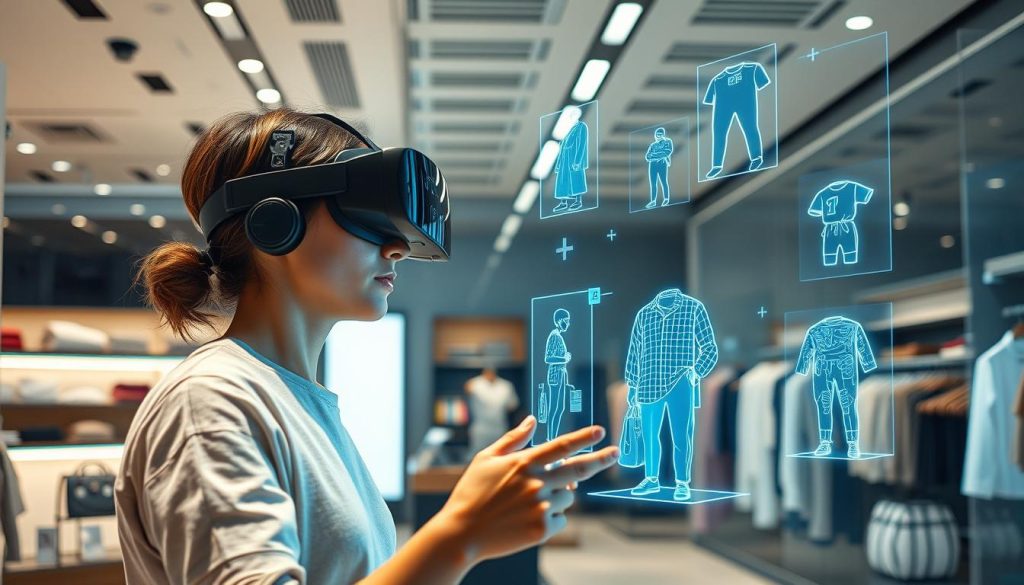
Today, businesses that integrate AR into their strategies are 41% more likely to capture customer attention. It’s not just about flashy visuals; AR solves real frustrations, like uncertainty about product fit or quality. For example, IKEA lets customers visualize furniture in their homes, while Amazon offers virtual try-ons for fashion.
The pandemic accelerated this shift, making AR a daily tool for many. By 2025, 76% of consumers expect AR to be a regular part of their shopping experience. It’s clear that this technology is here to stay, offering benefits like reduced returns and increased engagement.
Table of Contents
Key Takeaways
- 66% of shoppers are interested in AR-assisted buying.
- Businesses using AR are 41% more likely to attract attention.
- AR helps reduce returns and improve customer satisfaction.
- By 2025, 76% of consumers expect AR to be a daily tool.
- Brands like IKEA and Amazon are leading the way with AR applications.
What Is Augmented Reality Shopping?
Imagine seeing a piece of furniture in your home before buying it—sounds futuristic, right? This is the power of AR, a technology that overlays digital elements onto the physical environment. Using devices like smartphones, tablets, or glasses, AR brings products to life in your real world.
Unlike virtual reality, which creates entirely digital environments, AR enhances what you already see. For example, IKEA’s app lets you visualize furniture in your space, while Warby Parker’s virtual try-on feature shows how glasses look on your face. These tools bridge the gap between online and in-store experiences1.
AR isn’t limited to furniture or eyewear. Dulux’s Visualizer app lets you test paint colors on your walls, and L’Oréal’s virtual try-on tool helps you experiment with makeup. These applications address a common consumer desire: the ability to “try before you buy”2.
Hardware requirements for AR are minimal—most people already own compatible devices like smartphones. This accessibility makes AR a practical solution for enhancing the shopping experience. Whether you’re customizing a car or choosing the perfect shade of lipstick, AR brings the world of retail into your hands3.
How Augmented Reality Shopping Enhances Customer Experience
Ever wondered how technology can make buying decisions easier? It’s all about creating a seamless and interactive experience for shoppers. From trying on clothes to visualizing furniture, modern tools are transforming the way we shop.
Virtual Try-Ons for Makeup and Clothing
One of the most exciting features is the virtual try-on. Apps like Sephora’s Virtual Artist let you test makeup shades in real-time. Similarly, ASOS uses body-mapping technology in its “See My Fit” feature to show how clothes will look on your body.
These tools not only save time but also boost confidence in purchasing decisions. For example, Rebecca Minkoff saw a 65% conversion lift after implementing AR try-ons.
Visualizing Furniture in Your Home
Furniture shopping can be tricky, but apps like IKEA Place make it simple. Using your smartphone, you can scan your room and see how a piece of furniture fits. This eliminates the guesswork and ensures you choose the right size and style.
Amazon also offers a shoe visualization tool that lets you swap colors and styles. This feature helps customers make informed choices without visiting a store.
Reducing Returns with Accurate Previews
One of the biggest challenges in online shopping is returns. However, AR tools like Nike’s sneaker customization feature reduce this issue. By providing accurate previews, shoppers are less likely to return products.
Here’s a quick look at how AR impacts return rates:
| Brand | Return Reduction |
|---|---|
| Fashion Retailers | 5-40% |
| Gunner Kennels | 40% Conversion Boost |
| Macy’s Virtual Fitting Rooms | Significant Reduction |
These tools not only improve the experience but also contribute to sustainability by reducing shipping waste.
Augmented Reality Shopping in Action: Real-World Examples
Picture this: trying on shoes or customizing a car with just your phone. This isn’t science fiction—it’s happening now. Brands are using technology to bring products to life in ways that feel personal and practical. Let’s explore some standout examples.
IKEA Kreativ: Revolutionizing Furniture Shopping
IKEA’s app takes the guesswork out of furniture shopping. Using LiDAR scanning, it creates 3D replicas of your room. You can then place virtual furniture in your space to see how it fits. This technology ensures you choose the right size and style, saving time and reducing returns.
Amazon’s Virtual Try-On for Shoes
Amazon’s virtual try-on feature lets you see how shoes look on your feet. Using your phone’s camera, it tracks your foot movement for an accurate preview. This tool gives customers confidence in their choices, making online shopping more reliable.
Toyota’s AR Car Customization App
Toyota’s app uses machine learning for markerless AR. You can customize car accessories and see them in real-time. This technology enhances the shopping experience, letting you visualize your dream car before buying.
These examples show how brands are using technology to solve real customer needs. From furniture to cars, these tools make shopping more interactive and accurate. The future of retail is here, and it’s exciting.
The Role of AR in Reducing Retail Returns
Returns are a costly headache for retailers, but AR is changing the game. Every year, $550 billion is lost due to returned products. This isn’t just a financial issue—it’s a logistical and environmental challenge too. Thankfully, tools like virtual try-on are helping customers make better choices.

Here’s how it works: AR creates a psychological “ownership effect.” When customers visualize products in their space or on themselves, they feel more confident in their purchase. For example, Zenni Optical reduced returns by 29% after introducing AR try-ons.
Return rates tell the story. Without AR, 22% of online purchases are returned. With AR, that number drops to just 8%. Brands like Rebecca Minkoff have seen a 5% reduction in returns thanks to AR tools.
AR also improves accuracy in sizing, fit, and color. Fashion apps use algorithms to predict the right size, while cosmetics tools ensure color matches. Furniture apps even measure spaces to guarantee a perfect fit. These features not only reduce returns but also enhance the shopping experience.
Finally, AR benefits the environment. Fewer returns mean fewer shipments, reducing carbon footprints. It’s a win-win for customers and retailers alike. As AR continues to evolve, it’s clear that this technology is reshaping retail for the better.
Gamification and AR: Making Shopping Fun
What if shopping could feel like playing a game? Retailers are blending technology with creativity to turn buying into an interactive adventure. By adding game-like elements, brands are not only engaging customers but also enhancing their overall experience.
Tesco’s AR-Powered Family Quiz Game
Tesco’s Discover app is a great example of this trend. It features a product-scanning quiz that turns grocery shopping into a fun family activity. By scanning items, users unlock trivia and challenges, increasing their dwell time by 40%. This approach keeps customers engaged while subtly promoting products.
19 Crimes’ Interactive Wine Labels
19 Crimes takes storytelling to the next level with its AR-enabled wine labels. Scanning the label brings historical figures to life, sharing their stories in an engaging way. This unique feature led to a 70% sales lift, proving that creativity pays off.
Other brands are also jumping on the gamification bandwagon. Starbucks uses cup-scanning animations to surprise customers, while L’Oréal’s AR treasure hunts let users explore makeup collections in a playful way. Even Burger King’s “Burn That Ad” campaign turned ads into interactive experiences.
Here’s how gamification is transforming retail:
- Boosts engagement and dwell time.
- Encourages repeat visits and loyalty.
- Makes shopping more interactive and fun.
With Gen Z leading the charge, gamified apps are becoming a must-have for brands. By blending social media trends with AR, retailers are creating unforgettable experiences that keep customers coming back for more.
Social Media and AR Shopping Trends
Social media platforms are revolutionizing how we shop, blending technology with creativity. From Instagram’s Spark AR to TikTok’s Effect House, these tools are transforming the way users interact with brands. The integration of AR into social media isn’t just a trend—it’s a game-changer for the retail industry.
Instagram’s Spark AR platform has seen massive adoption, with over 250,000 creators developing custom filters. These filters drive 45% higher engagement, making them a powerful tool for brands to connect with their audience. Similarly, TikTok’s Effect House allows creators to design branded filters, enhancing the experience for millions of users.
Sephora’s virtual try-on campaigns on social media are a prime example of how AR can boost sales. Their campaigns have led to millions of shares, with OPI nail polish try-ons being shared over 2.8 million times. This level of engagement shows how AR can turn casual browsers into loyal customers.
User-generated AR content is another growing trend. Platforms like Snapchat encourage users to create and share their own AR experiences. Gucci’s Snapchat shoe try-ons are a standout example, blending creativity with practicality. This approach not only boosts brand visibility but also fosters a sense of community among users.
Here’s a quick look at how AR is shaping social commerce:
- Instagram AR filters drive 45% higher engagement.
- OPI nail polish try-ons shared 2.8M+ times.
- Gucci’s Snapchat shoe try-ons increase brand loyalty.
Livestream shopping is also integrating AR, allowing viewers to see products in real-time. This trend is particularly popular in the U.S., where brands are leveraging AR to create immersive shopping experiences. AI-generated AR filters are the next frontier, offering personalized and interactive content for users.
Privacy concerns, especially with facial AR, are being addressed through transparent data policies. Influencer collaborations are also playing a key role, with influencers using AR filters to promote products in a relatable way. As social media continues to evolve, AR will remain a cornerstone of the shopping experience.
How Brands Use AR for Post-Purchase Engagement
Have you ever thought about how technology keeps you connected with a brand after you’ve made a purchase? Many brands are now using innovative tools to enhance customer engagement long after the sale is complete. This approach not only builds loyalty but also creates memorable experiences that keep customers coming back.
For example, L’Oréal’s AR skincare tutorials have significantly increased their repurchase rate. By offering step-by-step guidance through their app, they ensure customers get the most out of their products. This level of support fosters trust and encourages repeat purchases.
LEGO’s Hidden Side app takes a different approach. It extends the play experience post-purchase by turning physical sets into interactive AR games. This keeps kids engaged and adds value to the original product. Similarly, Patrón Tequila uses AR bottle stories to share the brand’s history, making every sip a storytelling experience.
Here’s how other brands are leveraging AR for post-purchase engagement:
- IKEA’s AR assembly instructions simplify furniture setup.
- Wine labels with AR food pairing tips enhance dining experiences.
- Nike’s shoe customization options let customers personalize after purchase.
These examples show how AR can transform the post-purchase journey. From assembly guides to interactive storytelling, these tools create lasting connections with customers. Here’s a quick comparison of how AR impacts customer engagement:
| Brand | AR Feature | Impact |
|---|---|---|
| L’Oréal | Skincare Tutorials | Increased Repurchase Rate |
| LEGO | Hidden Side App | Extended Play Experience |
| Patrón Tequila | Bottle Stories | Boosted Brand Sharing |
As AR continues to evolve, its role in post-purchase engagement will only grow. Whether it’s through social media campaigns or loyalty programs, this technology is reshaping how brands connect with their customers. The future of retail isn’t just about the sale—it’s about creating lasting relationships.
AR Hardware Innovations Shaping Retail
The way we interact with products in stores is evolving faster than ever. From smart mirrors to AR-enabled glasses, new technology is transforming the retail experience. These innovations are not just futuristic concepts—they’re already changing how we shop.

Smart Mirrors and In-Store Displays
Smart mirrors are becoming a staple in retail spaces. For example, MAC Cosmetics uses AR mirrors to let customers try on makeup virtually. This technology boosts engagement and helps shoppers make confident choices.
Walmart has also embraced this trend with virtual dressing rooms. Customers can see how clothes fit without stepping into a changing room. This not only saves time but also enhances the in-store experience.
By 2032, the smart mirror market is expected to reach $9.1 billion. With 73% of retailers planning installations, this technology is here to stay.
The Rise of AR-Enabled Smart Glasses
Smart glasses are another game-changer. Google’s Project Iris, launching in 2024, promises to bring AR into everyday life. These glasses will let users interact with products in new ways, from navigation to virtual try-ons.
Bose AR sunglasses are already making waves. They combine audio and visual AR to create immersive experiences. Nreal Light glasses are also popular, offering retail demos that showcase the future of shopping.
Here’s a quick comparison of smartphone vs. glasses AR experiences:
- Smartphones: Accessible and widely used, but limited by screen size.
- Glasses: Hands-free and immersive, but still in early adoption stages.
As this technology advances, we’ll see more integrations like Lowe’s Holoroom how-to guides and BMW’s AR windshield navigation. The future of retail is bright, and AR hardware is leading the way.
The Future of AR in Retail
The retail landscape is evolving faster than ever, and AR is at the forefront of this transformation. By 2025, 80% of retailers plan to invest in AR, signaling a seismic shift in the industry. From multi-sensory experiences to brain-computer interfaces, the possibilities are endless.
One exciting development is multi-sensory AR. Imagine not just seeing a product but feeling its texture or even smelling it. This technology will create immersive experiences that bridge the gap between online and in-store shopping.
Brain-computer interfaces are another frontier. These could allow shoppers to navigate stores or customize products using just their thoughts. While still in its early stages, this technology could redefine convenience in the retail world.
Blockchain-verified AR products are also on the horizon. This ensures authenticity and transparency, addressing concerns about counterfeit goods. For example, luxury brands could use AR to verify the origin of their products.
Autonomous store navigation is another game-changer. AR-powered apps could guide shoppers to products, suggest alternatives, and even provide real-time discounts. This reduces friction and enhances the overall experience.
Here’s a quick look at how AR is shaping the future of retail:
| Innovation | Impact |
|---|---|
| Multi-Sensory AR | Immersive shopping experiences |
| Brain-Computer Interfaces | Thought-based navigation |
| Blockchain-Verified Products | Enhanced authenticity |
Sustainability is another key focus. AR can reduce waste by providing accurate product previews, minimizing returns. It also supports virtual try-ons, cutting down on packaging and shipping.
Regulatory challenges remain, especially around data privacy. However, transparent policies and ethical practices can address these concerns. Workforce training is also crucial, as employees must adapt to new technologies.
By 2028, the spatial computing market is expected to hit $280 billion, driven by AR advancements. AI-generated 3D models are reducing implementation costs, making AR accessible to more retailers.
AR is not just a trend—it’s the fourth platform shift in retail. From AR-dominated malls to personal shopping assistants, the future is here. It’s an exciting time to be part of this transformation.
Conclusion
As I reflect on the rapid changes in retail, it’s clear that technology is reshaping how we connect with products. From boosting engagement to driving loyalty, these tools are transforming the experience for customers and businesses alike.
The urgency to adopt these innovations is undeniable. Younger generations are leading the charge, with Gen Z and Millennials embracing these tools faster than ever. As implementation costs decrease, now is the perfect time for retailers to dive in.
Starting with social media AR is a smart move. Platforms like Instagram and TikTok make it easy to create interactive campaigns that resonate with audiences. By 2025, I predict these tools will become mainstream, offering benefits like reduced returns and enhanced satisfaction.
For retailers, the future is bright. By integrating these tools, you can create memorable experiences that keep customers coming back. The time to act is now—embrace the change and lead the way in this exciting new era of retail.
1 thought on “Augmented Reality Shopping: Elevate Your Retail Experience”