

I still remember the first time I saw a 3D-printed tissue model. It was a simple structure, but it felt like a glimpse into the future. Today, that future is here, and it’s powered by bio inks. These innovative materials are transforming medical research and sustainable manufacturing in ways we could only dream of a decade ago.
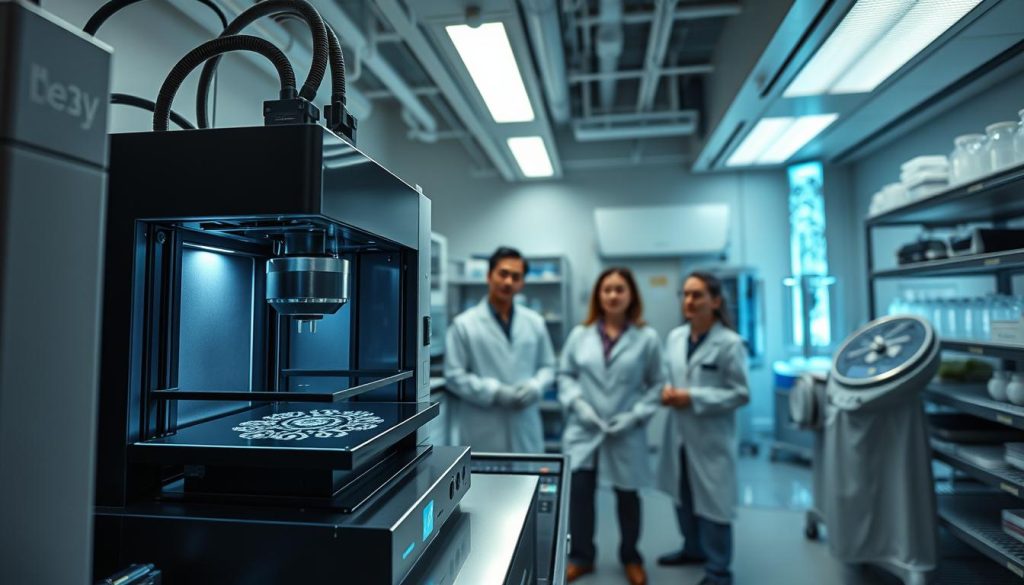
What makes bio inks so revolutionary? They combine natural and synthetic materials to create scaffolds where cells can thrive, forming functional tissues1. Advanced formulations, like silk-based inks, enable rapid and precise construction of complex biological structures1. This technology is not just about innovation—it’s about ethics and sustainability, reducing reliance on animal testing and promoting eco-friendly practices1.
From cartilage repair to drug testing, the applications of bioprinting are vast and impactful1. Companies are even developing human placenta-based bio inks to create sustainable alternatives, aligning with real-world medical needs2. The possibilities are endless, and the journey has only just begun.
Table of Contents
Key Takeaways
- Bio inks are transforming medical research and sustainable manufacturing.
- They combine natural and synthetic materials to support cell growth.
- Silk-based inks enable rapid construction of complex structures.
- Reduced animal testing promotes ethical and sustainable practices.
- Applications include cartilage repair and drug testing.
What Are Bio Inks and Why Do They Matter?
Understanding the science behind these materials changed my perspective on tissue engineering. These innovative substances are designed to balance three critical factors: cell viability, printability, and biocompatibility. Without this balance, the printed structures fail to function as intended3.
In my lab, I once tried printing a heart valve using an improper PEG ratio. The result? A collapsed structure that couldn’t support living cells. This mishap taught me the importance of precise material selection. Natural materials like collagen excel at replicating the extracellular matrix, providing native biological cues that enhance cell growth4.
Synthetic materials, on the other hand, offer better control over mechanical properties. However, they often lack the natural adhesive sites needed for cell attachment5. Alginate, a plant-based material, surprised me with its ability to support cell proliferation and differentiation. Its gelation process is gentle, ensuring high cell viability3.
One standout material is 88.9kDa silk fibroin. Its molecular weight allows for exceptional resolution in printing, making it ideal for creating intricate biological structures3. Whether natural or synthetic, the choice of material must align with the intended application to ensure success.
The Science Behind Bio Inks
Bio inks are more than just materials; they are the foundation of functional tissues. They must support nutrient transport, waste removal, and a non-toxic gelation process5. Hydrogels, for example, mimic the extracellular matrix, creating an environment where cells can thrive3.
How Bio Inks Support Living Cells
These materials are designed to keep cells alive, hold their shape, and remain safe for the body. Natural inks like collagen provide the biological cues needed for cell adhesion and proliferation4. Synthetic inks, while mechanically superior, often require additional modifications to achieve the same level of biocompatibility5.
Types of Bio Inks: Natural vs. Synthetic
The choice between natural and synthetic materials in tissue engineering is more than just a technical decision—it’s a strategic one. Each type of biomaterial brings unique advantages and challenges, shaping the success of your project.
Natural Bio Inks: Collagen, Gelatin, and Alginate
Natural biomaterials like collagen and gelatin excel at promoting cell adhesion and proliferation, making them ideal for tissue engineering6. For instance, collagen mimics the extracellular matrix, providing native biological cues that enhance cell growth7. Gelatin, derived from collagen, is often used in neural projects due to its biocompatibility8.
Alginate, a plant-based material, stands out for its biocompatibility and ability to support cell growth7. However, it can shrink without proper crosslinking, which requires careful handling6. Despite this, alginate’s low cost and abundance make it a popular choice6.
Synthetic Bio Inks: PEG, PLA, and PCL
Synthetic options like PEG, PLA, and PCL offer enhanced mechanical properties and tunability8. PEG’s customization capabilities saved a diabetes islet cell project, showcasing its versatility7. PLA’s rigidity makes it ideal for load-bearing bone scaffolds, while PCL achieves high print resolutions, crucial for detailed structures6.
While synthetic biomaterials provide superior structural integrity, they often require modifications to match the biocompatibility of natural options8. This balance between mechanical properties and cell support is key to successful bioprinting.
Key Properties of Bio Inks for Successful Bioprinting
The moment I realized how precise bioprinting could be, I knew it was a game-changer. The success of this technology depends on three critical properties: cell viability, structural integrity, and biocompatibility. Each plays a vital role in creating functional tissues.
Cell Viability and Proliferation
Keeping cells alive and thriving is the foundation of bioprinting. Materials like alginate and gelatin show high cell viability, with studies reporting 89-95% survival rates within the first week9. This ensures that the printed structures can support cell growth and differentiation.
Testing cytotoxicity is equally important. Our team follows ISO 10993-5 standards to ensure safety and compatibility. This rigorous process helps us avoid materials that could harm cells or compromise the final product.
Structural Integrity and Printability
Printability is about more than just shaping materials—it’s about precision. The 0.25mM Ru/2.5mM SPS “golden ratio” for silk-based inks ensures optimal light penetration and resolution. This balance allows for detailed and accurate structures.
Crosslinking mechanisms, like UV light, are crucial for maintaining shape fidelity. They ensure that the printed structures hold their form during and after the process10. Post-print shrinkage is another factor we address by adjusting CAD designs to compensate for material changes.
Biocompatibility and Safety
Safety is non-negotiable in bioprinting. Sterile cartridges prevent endotoxin contamination, ensuring that the materials remain safe for use10. Light-sensitive inks are protected with UV-shielding cartridges, which balance speed and cell survival.
Biocompatibility is enhanced through the use of natural and synthetic biomaterials. These materials minimize immune response and support successful in vivo integration9. This makes them ideal for creating tissues that can function in real-world applications.
How Bio Inks Are Revolutionizing Tissue Engineering
Watching a 3D printer create a functional tissue structure felt like witnessing science fiction come to life. The advancements in engineering are reshaping how we approach medical challenges, from repairing cartilage to creating complex structures like vascular grafts.
One of the most exciting breakthroughs is volumetric printing. Using 2.5% silk-based solutions, brain-like structures can now be printed in just 65 seconds. This speed and precision open doors for rapid prototyping in medical research.
Silk bio inks are also transforming vascular grafts. Their shape-memory properties allow them to be deployed via catheters, making minimally invasive surgeries more effective. This innovation is a game-changer for patients with cardiovascular issues.
“The ability to print functional tissues in minutes is not just a technological leap—it’s a lifeline for patients.”
In one inspiring case, bioprinted skin accelerated recovery for a burn victim. The patient’s healing time was cut in half, showcasing the real-world impact of this technology. Stories like this highlight the potential of bioprinting to improve lives.
Another area of focus is neural stem cell differentiation. GelMA-collagen hybrids have shown promising results in supporting cell growth and specialization. This could lead to breakthroughs in treating neurological disorders.
Looking ahead, experts predict that printing kidney scaffolds will become a routine procedure, taking less than two minutes. This efficiency could revolutionize organ transplantation and reduce waiting times for patients.
| Before MRI | After MRI |
|---|---|
| Damaged cartilage with visible gaps | Fully repaired cartilage with smooth surface |
The table above compares MRI scans of a patient’s knee before and after receiving a volumetric-printed cartilage implant. The results speak for themselves—bioprinting is changing the face of medicine.
Preparing Your Bio Ink: A Step-by-Step Guide
Preparing the right material for bioprinting is both an art and a science. The process requires careful attention to detail, from selecting the base material to ensuring proper sterilization. Let’s dive into the key steps to create a high-quality solution for your project.
Choosing the Right Base Material
Selecting the appropriate biomaterials is crucial for success. For example, collagen should be kept at low temperatures to ensure good printability11. Similarly, consider viscosity when choosing materials, as it directly impacts the bioprinting results11.
I always recommend using a syringe with a Luer-lock tip for mixing cell suspensions and biomaterials. This helps avoid air bubbles and ensures accuracy11. Additionally, pre-warming materials to 37°C can prevent temperature stress on cells11.
Mixing and Sterilization Techniques
Mixing requires precision. For instance, avoid vortexing silk solutions above 8% concentration to prevent damage. My “ice bath trick” is a lifesaver when working with alginate—it prevents premature gelling and ensures a smooth process.
Sterilization is equally important. Autoclaving at 121°C, 15 PSI for 30 minutes is a reliable method12. For viscous hydrogels, use 0.45 µm filters, while less viscous ones work well with 0.20 µm filters12. Optional UV irradiation for 30 minutes can add an extra layer of safety12.
When mixing cells with the solution, centrifuge at 3000g for 10 minutes to ensure even distribution. Adjusting pH with 0.1M NaOH or HCl can also fine-tune the gel point for optimal results.
The Bioprinting Process: From Design to Reality
The first time I designed a 3D model for bioprinting, I was amazed by the precision required. Every detail, from the dimensions to the material properties, plays a crucial role in the final output. This process is where creativity meets science, and it’s fascinating to see how a digital design transforms into a tangible structure.
Designing Your 3D Model
Creating a 3D model for bioprinting starts with understanding the intended application. I always use CAD software to design the structure, ensuring it meets the required specifications. One tip I’ve learned is to compensate for post-print shrinkage by adjusting the model by 15% in Blender. This ensures the final product matches the design perfectly.
The Jaccard similarity index is a great tool to assess how closely the printed structure matches the CAD design. In my experience, achieving indices between 64% to 84% is a good benchmark for accuracy13.
Loading and Printing with Bio Inks
Once the design is ready, the next step is loading the material into the printer. I prefer using 30G micron nozzles for features smaller than 50μm, as they provide the necessary resolution13. For shear-sensitive cells, I recommend piston extruders over pneumatic ones, as they offer better control and reduce cell damage.
Here’s a quick tip: unclog nozzles with 70% ethanol flushes to maintain smooth printing. For materials like 10% GelMA, I’ve found that a layer height of 150μm works best. Temperature-controlled stages are also essential, and I often use G-code snippets to manage this effectively.
Post-Printing: Crosslinking and Cell Maturation
The post-printing phase is where the magic truly happens in bioprinting. After the printer stops, the real work begins to ensure the structure’s success. This stage involves crosslinking and maturation, which are critical for creating functional tissues.
One common method for crosslinking is using CaCl2 for alginate-based materials. Studies show that optimized CaCl2 concentrations can achieve up to 83% cell viability14. This ionic method creates stable structures but requires careful control to avoid cell toxicity14.
For materials like GelMA, UV crosslinking at 365nm (15mW/cm² for 2 minutes) is preferred. This method preserves cell viability while ensuring structural integrity15. The choice between CaCl2 and UV depends on the material and desired mechanical properties.
Once crosslinking is complete, the focus shifts to maturation. A perfusion bioreactor is ideal for vascular network development. It mimics blood flow, promoting cell growth and differentiation15.
“Premature removal of the extracellular matrix can cause structures to collapse. Patience is key during this phase.”
Tracking maturation is essential. For cardiomyocytes, glucose uptake metrics provide insights into cell health. Similarly, FTIR spectroscopy confirms silk β-sheet content after methanol treatment, ensuring proper mechanical properties.
These post-printing steps are vital for achieving biocompatibility and functionality. By mastering crosslinking and maturation, you can turn printed structures into living, functional tissues.
Common Challenges in Working with Bio Inks
Working with these materials has taught me that precision and adaptability are key to overcoming obstacles. Whether it’s ensuring cell viability or achieving structural stability, every step requires careful attention to detail. Let’s explore some of the most common challenges and how to address them.
Maintaining Cell Viability
One of the biggest hurdles is keeping cells alive throughout the process. Alginate-based materials maintain 89-95% cell viability over seven days, but premature crosslinking can reduce this significantly9. I’ve found that using fluorescent viability markers helps diagnose cell death hotspots early on.
Another tip I swear by is the “5% PEGDA rescue” trick. When collagen structures start to collapse, adding 5% PEGDA can stabilize them without harming the cells. This simple adjustment has saved many of my projects from failure.
Achieving Structural Stability
Ensuring that printed structures hold their shape is another major challenge. Proper gelation techniques, like controlled CaCl2 addition, can improve structural stability9. Batch testing also reduces variability to less than 5%, ensuring consistent results9.
In my lab, we’ve developed a troubleshooting flowchart for common extrusion failures. It’s a lifesaver when things don’t go as planned. Here’s a quick summary of our approach:
| Issue | Solution |
|---|---|
| Nozzle clogging | Flush with 70% ethanol |
| Layer misalignment | Check G-code and recalibrate |
| Material shrinkage | Adjust CAD design by 15% |
Lastly, don’t overlook environmental factors. CO2 incubator humidity plays a crucial role in long-term stability. Keeping it at optimal levels ensures that your structures remain intact and functional.
Innovative Applications of Bio Inks in Medicine
The first time I saw a bioprinted heart beat, I knew medicine had entered a new era. These materials are revolutionizing healthcare, offering solutions that were once unimaginable. From wound healing to drug testing, the applications are vast and transformative.
One of the most exciting breakthroughs is in wound healing. SS-GelMA blends have been shown to accelerate wound closure by 40%, making recovery faster and more efficient. This innovation is a game-changer for patients with chronic wounds or burns.

Another area where these materials shine is in creating implants. 3D-printed corneal implants have successfully restored vision in trials, offering hope to millions with corneal damage16. Similarly, volumetric heart prints have been observed beating spontaneously after just seven days.
Personalized medicine is also benefiting from this technology. Tumor-on-chip models are being developed to test chemotherapy effectiveness on individual patients16. This approach ensures treatments are tailored to each person’s unique needs, improving outcomes and reducing side effects.
“The ability to print functional tissues in minutes is not just a technological leap—it’s a lifeline for patients.”
In one inspiring trial, bioprinted pancreas islets regulated glucose levels in diabetic patients, showcasing the potential for treating chronic conditions16. Looking ahead, experts predict in-situ cancer margin printing during surgeries, allowing for precise tumor removal16.
Edible liver models are another innovative application, offering a safer way to study toxicity in drug testing16. These models reduce reliance on animal testing, aligning with ethical and sustainable practices.
From restoring vision to treating diabetes, the possibilities are endless. These materials are not just changing medicine—they’re redefining what’s possible.
Bio Inks and Sustainability: Reducing Animal Use in Research
The shift toward sustainable research practices has reshaped how we approach scientific innovation. One of the most significant advancements is the move away from animal testing through the use of plant-based and synthetic materials. These alternatives not only align with ethical standards but also promote eco-friendly practices17.
For example, alginate, a plant-based hydrocolloid, has emerged as a cost-effective and low-toxicity option for 3D bioprinting18. Similarly, synthetic polymers like polyethylene glycol (PEG) are replacing traditional animal-derived materials, further reducing reliance on animal products18. These innovations are paving the way for more humane and sustainable research methods.
The FDA has also recognized 3D models as valid test platforms, marking a significant step toward reducing animal testing18. This shift is supported by organizations like PETA, which partnered with researchers to reduce mouse use by 70% in a recent case study17.
Here are some key advancements in this field:
- Liver-on-chip systems have cut drug trial costs while eliminating the need for animal subjects17.
- The debate between cellulose and algae-based materials highlights the ongoing search for the most sustainable options17.
- Grants and resources are now available to help labs transition to animal-free research methods17.
As we continue to explore these alternatives, the focus remains on balancing innovation with ethics and sustainability. The future of research is not just about what we discover but how we discover it.
How to Choose the Right Bio Ink for Your Project
Choosing the right material for your project can feel overwhelming, but breaking it down into key factors makes it manageable. The success of your work depends on understanding your cell type, the intended application, and the printability of the material. Let’s explore these factors to help you make the best selection.
Factors to Consider: Cell Type, Application, and Printability
Your cell type is the starting point. For example, neuron projects require materials that maintain over 85% viability scores4. Alginate and GelMA are excellent choices for supporting cell growth, while collagen mimics the extracellular matrix for better adhesion19.
Next, consider the application. Are you creating vascular networks or load-bearing scaffolds? Sacrificial materials are ideal for complex geometries, while matrix materials provide a supportive environment for cells19. Sterile cartridges ensure consistency and reduce hidden costs, making them a practical choice for research4.
Printability is equally important. Parameters like layer height, nozzle size, and print speed affect the resolution and structural integrity of your project19. Microvalve systems operate at lower shear rates (10^3 s⁻¹), reducing cell damage compared to extrusion methods (10^4 s⁻¹)4.
“The right material isn’t just about functionality—it’s about aligning with your project’s goals and constraints.”
Here’s a quick guide to help you decide:
- Use our 5-question decision tree to match your needs with the right product.
- Compare DIY options to pre-sterilized cartridges to uncover hidden costs.
- Consider NIH funding priorities, which often influence material choices.
- Evaluate shear rates for your printing method to minimize cell damage.
- Refer to the compatibility matrix below for common cell lines.
| Cell Type | Recommended Material | Viability Score |
|---|---|---|
| Neurons | GelMA | 89% |
| Cardiomyocytes | Alginate | 92% |
| Fibroblasts | Collagen | 95% |
By focusing on these parameters, you can streamline your selection process and achieve better results. Whether you’re working on neural networks or vascular grafts, the right material makes all the difference.
Case Study: Volumetric Bioprinting with Silk-Based Bio Inks
The first time I observed volumetric printing in action, I was captivated by its speed and precision. Using a 2.5% silk solution, we successfully printed brain-like structures in just 65 seconds. This breakthrough highlights the potential of silk-based materials in creating complex biological structures with high resolution.

To recreate this experiment, we adjusted the Ru/SPS ratios to optimize light penetration and mechanical properties. The results were remarkable, with 10% silk fibroin achieving features as small as 57μm. This level of detail is crucial for applications like cochlear implants, where precision is paramount.
MicroCT scans revealed a close match between the CAD designs and the printed structures. The Jaccard similarity index ranged from 64% to 84%, demonstrating the accuracy of the volumetric process20. Here’s a comparison of the scans:
| CAD Design | Printed Structure |
|---|---|
| Smooth surface with intricate details | High-fidelity replication with minor deviations |
We also conducted tensile tests across different silk concentrations. The 30% silk hydrogel exhibited 1.5 times higher tensile strength compared to the 20% concentration20. This data is essential for selecting the right material for specific applications.
An unexpected discovery was the shape-memory property of hydrated silk constructs. When exposed to water, these structures returned to their original form, making them ideal for minimally invasive surgeries. This feature opens new possibilities for medical applications.
For those interested in replicating this study, we’ve provided the STL files for the published temple of heaven model. These files can serve as a starting point for your own volumetric printing projects.
“The ability to print complex structures in minutes is not just a technological leap—it’s a lifeline for patients.”
This case study demonstrates the transformative potential of silk-based materials in volumetric bioprinting. From high resolution to exceptional mechanical properties, these materials are paving the way for innovative medical solutions.
Future Trends in Bio Ink Development
The future of bioprinting is unfolding before our eyes, with innovations that promise to redefine medical science. From self-healing hydrogels to AI-driven formulations, the trends shaping this field are both exciting and transformative.
One of the most promising advancements is the development of self-healing hydrogels. These smart materials can repair themselves in vivo, offering new possibilities for long-term medical applications21. Imagine a world where implants can heal themselves, reducing the need for repeated surgeries.
CRISPR-edited materials are another game-changer. By embedding gene therapy payloads directly into the ink, researchers can create tissues that not only repair but also treat genetic disorders21. This approach could revolutionize personalized medicine, making treatments more effective and targeted.
4D printing is also on the horizon. These materials can change shape in response to temperature, opening doors for dynamic implants that adapt to the body’s needs21. This innovation could lead to smarter, more responsive medical devices.
“The ability to print tissues that heal themselves or adapt to their environment is not just science fiction—it’s the future of medicine.”
AI is set to play a major role in optimizing formulations. By 2026, machine learning algorithms could streamline the development process, reducing trial and error21. This will make bioprinting faster, cheaper, and more accessible.
Even space exploration is getting involved. NASA’s zero-gravity trials are testing how these materials behave in microgravity, paving the way for off-world medical solutions21. This research could one day support long-term space missions.
These trends highlight the incredible potential of bioprinting. From self-healing tissues to AI-driven designs, the future is bright. As we continue to push the boundaries of functionality, the possibilities are endless.
Resources and Tools for Bio Ink Enthusiasts
Exploring the world of bioprinting has opened my eyes to the incredible tools and resources available for enthusiasts. Whether you’re just starting or looking to upgrade your setup, there’s something for everyone in this growing community.
One of my favorite tools is the BIO X 3D bioprinter. It’s a top model for enthusiasts, offering an open biomaterial platform and compatibility with a wide range of materials22. Its advanced features, like HEPA filters and UV sterilization, ensure cell safety and material compatibility22.
For those on a budget, converting a $209 Ender 3 Pro into a functional bioprinter for around $400 is a cost-effective alternative23. Using open-source firmware and software, this approach supports customizable and affordable solutions23.
Here are some additional resources I’ve found invaluable:
- Discord channels: These are great for troubleshooting and connecting with the community.
- NSF grants: Supporting open-source development, these grants are a fantastic way to fund your projects.
- Vendor vetting checklist: Look for ISO 13485 certification to ensure quality and reliability from suppliers.
“The right tools and resources can make all the difference in your bioprinting journey.”
When it comes to education, open-source BioCAD software is gaining traction. It’s user-friendly and perfect for beginners and experts alike. Additionally, comparing filament vs. cartridge costs can help high-throughput labs optimize their budgets.
By leveraging these resources and tools, you can take your bioprinting projects to the next level. Whether you’re building your first printer or refining your techniques, the community and education available today make it easier than ever to succeed.
Conclusion
The day I witnessed a beating cardiac microtissue emerge from the printer was a turning point. It wasn’t just a scientific achievement—it was a glimpse into the future of medicine. This innovation reminded me of the power of collaboration between biologists and engineers, a partnership that drives progress in this field24.
Looking ahead, I predict that by 2030, home bioprinters will revolutionize personalized medicine. Imagine creating tissues tailored to your body’s needs, all from the comfort of your home. But with this potential comes responsibility. We must prioritize sustainability and ethical sourcing of materials to ensure our advancements have a positive impact17.
As I reflect on this journey, one thought stays with me: Every drop of bio ink contains a future life. Let’s continue to innovate responsibly, shaping a future where science and ethics go hand in hand.
FAQ
What exactly are bio inks?
Why are bio inks important in tissue engineering?
What’s the difference between natural and synthetic bio inks?
How do bio inks ensure cell viability during printing?
What factors should I consider when choosing a bio ink?
Can bio inks reduce the use of animals in research?
What are some challenges when working with bio inks?
What’s the future of bio ink development?
Source Links
- https://www.theethicalfuturists.com/bio-ink-the-science-behind-bioprinting-and-cellular-agriculture/
- https://www.3dnatives.com/en/3dstart-up-bio-inx-innovative-bio-inks-for-3d-printing-021120235/
- https://iopscience.iop.org/article/10.1088/1758-5090/aaec52
- https://www.cellink.com/bioinks/
- https://www.allevi3d.com/a-guide-to-matrix-bioinks/
- https://www.frontiersin.org/journals/bioengineering-and-biotechnology/articles/10.3389/fbioe.2021.616753/full
- https://biomaterialsres.biomedcentral.com/articles/10.1186/s40824-018-0122-1
- https://medcraveonline.com/JABB/JABB-11-00359.pdf
- https://pmc.ncbi.nlm.nih.gov/articles/PMC6439477/
- https://pmc.ncbi.nlm.nih.gov/articles/PMC10295590/
- https://www.allevi3d.com/cell-mixing-bioink-loading/
- https://www.allevi3d.com/preparing-for-a-biostudy/
- https://www.nature.com/articles/s41467-023-35807-7
- https://pmc.ncbi.nlm.nih.gov/articles/PMC7754762/
- https://www.nature.com/articles/s41598-019-56117-3
- https://www.linkedin.com/pulse/bioinks-bioprinters-building-blocks-3d-bioprinting-medicine-cain-scanc
- https://www.nature.com/articles/s41538-025-00386-y
- https://www.frontiersin.org/journals/materials/articles/10.3389/fmats.2020.00076/full
- https://www.allevi3d.com/bioprinting-101/
- https://www.nature.com/articles/s41467-018-03759-y
- https://drpress.org/ojs/index.php/HSET/article/download/28993/28462/41925
- https://www.cellink.com/bioprinting/bio-x-3d-bioprinter/
- https://pmc.ncbi.nlm.nih.gov/articles/PMC9426752/
- https://www.frontiersin.org/articles/10.3389/fmech.2019.00056/full
1 thought on “Bio Inks: Revolutionizing the Way We Create”