
If you’ve ever wondered how we can make our world cleaner and less wasteful, you’ve probably heard about the circular economy. But what are the actual principles of the circular economy? What makes this idea so powerful, and how can we use it to help save the planet? Let’s break it down in a way that’s fun, easy to understand, and packed with real-life examples!
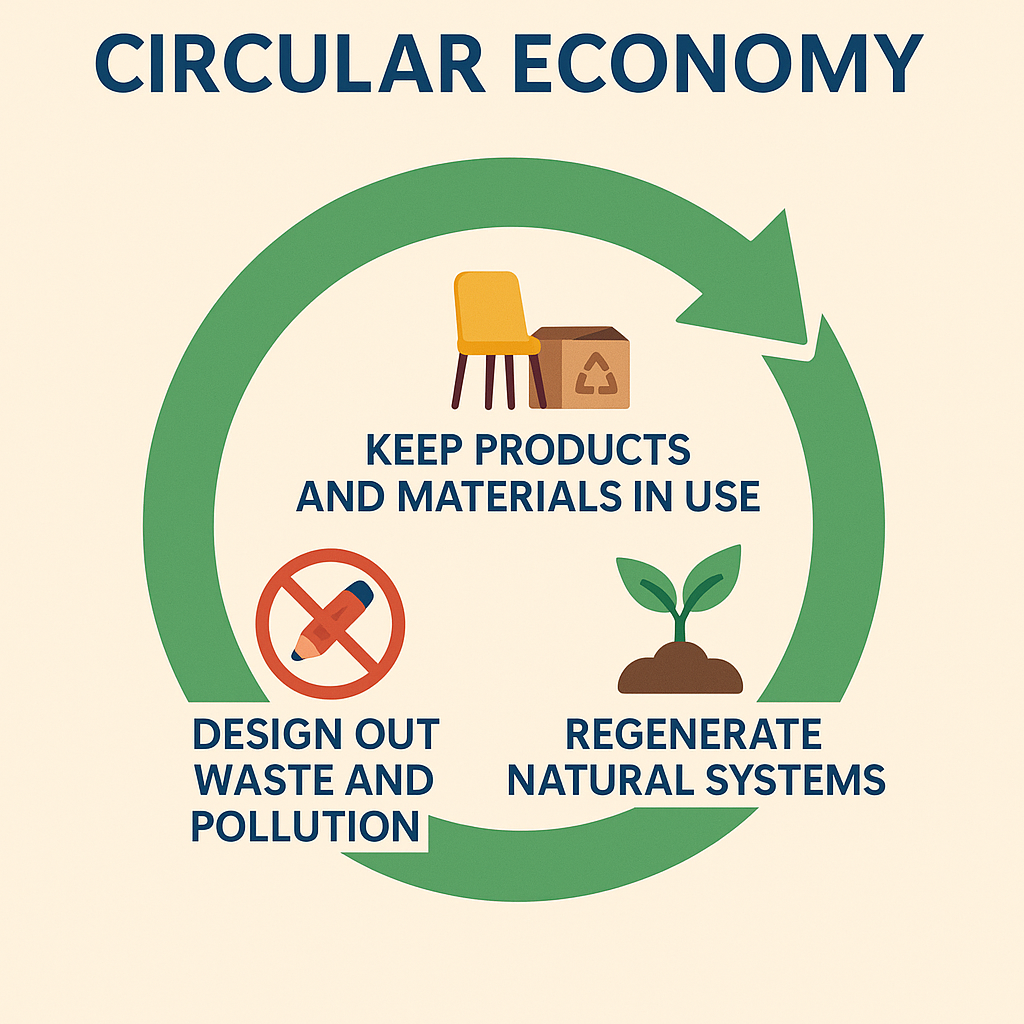
Table of Contents
Why Do We Need the Circular Economy?
Before we dive into the principles, let’s remember why the circular economy is so important. The world mostly works in a “take, make, waste” way (that’s called the linear economy). But this method is causing pollution, wasting resources, and filling up our landfills.
The circular economy is all about breaking that old habit and making our products—and even our lives—more sustainable. Instead of throwing things away, we keep them in use for as long as possible.
Read more about circular vs linear economy
The Three Core Principles of the Circular Economy
When experts talk about the principles of the circular economy, they usually focus on three big ideas. These were first shared by the Ellen MacArthur Foundation and are now the foundation for companies and countries working towards a greener future.
1. Design Out Waste and Pollution
The first principle of the circular economy is all about stopping waste and pollution before they even happen. This means that companies and designers think carefully about how things are made. They ask questions like:
- Can this product be made with less packaging?
- Can we use materials that are easy to recycle?
- Are there toxic chemicals we can avoid?
For example, some shoe brands are now making sneakers from a single type of material so they’re easy to recycle, instead of a mix of plastics, glues, and fabrics. If we design products to last and be recycled, we’re one step closer to a cleaner world!
2. Keep Products and Materials in Use
The second principle of the circular economy is about keeping stuff in use for as long as possible. That means repairing, sharing, reusing, and recycling everything from bikes to clothing to electronics.
Here are some cool ways this principle works:
- Repair Cafés: In many cities, you can go to a community event to fix your broken gadgets or clothes for free!
- Secondhand Stores: Thrift shops let you give clothes, toys, and furniture a second life.
- Refurbished Electronics: Companies like Apple and Dell sell repaired laptops and phones for less, reducing waste.
3. Regenerate Natural Systems
The last principle of the circular economy is all about giving back to nature. Instead of just using up resources, we try to restore and improve them. For example:
- Composting food waste returns nutrients to the soil.
- Farming methods like “regenerative agriculture” plant different crops and add nutrients to the earth, instead of stripping it bare.
- Using renewable energy (like solar or wind power) instead of burning fossil fuels.
This principle helps heal the planet so it stays healthy for future generations.
Real-Life Examples of the Principles of the Circular Economy
Let’s see these principles in action:
- Design Out Waste: Loop is a company that lets you buy products in reusable packaging. When you’re done, you return the empty containers to be cleaned and used again.
- Keep Products in Use: Clothing brands like Patagonia offer repairs and encourage customers to buy used gear.
- Regenerate Nature: Some coffee shops use their old coffee grounds as fertilizer for local gardens.
How Can You Use the Principles of the Circular Economy?
You don’t have to own a big company to make a difference! Here’s how you can use these principles at home or school:
- Design out waste: Avoid single-use plastics. Choose products with less packaging.
- Keep things in use: Mend your clothes, trade books with friends, donate old toys.
- Regenerate nature: Compost your food scraps. Plant a tree. Start a garden with your family or class.
If everyone follows these simple steps, together we can help turn our linear world into a circular one!
Final Thoughts
The principles of the circular economy aren’t just big ideas—they’re ways we can all make better choices for our planet. By designing out waste, keeping products in use, and regenerating natural systems, we build a cleaner, smarter, and more sustainable world.
Let’s keep learning, sharing, and taking action—one smart choice at a time!
Sources:
- Ellen MacArthur Foundation: Circular Economy Diagram
- World Economic Forum: How does the circular economy work?
- Loop: Circular Shopping Platform
What are your favorite ways to live by the principles of the circular economy? Share in the comments!