

Did you know that over 1 million boats worldwide now rely on solar power to reduce their environmental impact? My journey into marine solar energy began with a simple question: how can I make my boating trips more eco-friendly? This curiosity led me to explore the world of solar panels, and I quickly discovered the transformative benefits they offer.
One of the most surprising aspects I found was how much of a difference high-efficiency panels can make. For instance, a 100-watt panel with average efficiency produces about 500 watt-hours daily, while a high-efficiency version can generate up to 650 watt-hours1. This 12-amp-hour difference might seem small, but it adds up over time, especially for extended voyages.
Choosing the right panel isn’t just about efficiency; it’s also about durability and fit. Monocrystalline panels, for example, are more efficient in direct sunlight, while polycrystalline panels offer great performance at a lower price point2. Understanding these differences helped me select the perfect system for my boat, ensuring it meets both my energy needs and budget.
In this guide, I’ll walk you through everything I’ve learned, from the types of panels to installation tips and maintenance advice. Whether you’re a seasoned sailor or a new boat owner, this guide will help you navigate the world of marine solar energy with confidence.
Table of Contents
Key Takeaways
- High-efficiency panels can produce up to 30% more power than lower-quality options.
- Monocrystalline panels are more efficient in direct sunlight compared to polycrystalline.
- A 100-watt panel with high-efficiency cells can generate 650 watt-hours daily.
- Proper panel selection and installation are crucial for maximizing energy output.
- The Federal tax credit offers 30% off qualified solar panel installations.
Introduction to My Journey with Marine Solar Energy
My journey with marine solar energy began over a decade ago when I first installed a small solar panel on my boat. At the time, I was curious about how solar power could help reduce my reliance on the engine for charging the battery. I remember being fascinated by how a simple setup could provide enough power to keep my lights on overnight2.
My First Encounter with Solar Power Onboard
Those early days were a learning curve. I started with a basic 10-watt panel, which generated about 3 to 5 amp-hours daily3. It was enough to keep my anchor light running, but I quickly realized the potential for more. Upgrading to a higher-efficiency panel made a significant difference, boosting my daily output by nearly 30%3.
The Evolution of Solar Technology in Boating
Over the years, I’ve witnessed remarkable advancements in solar technology. Modern monocrystalline panels, with their 17% efficiency, now outperform the older models I once used2. Improved charge controllers and better battery systems have also played a crucial role in maximizing energy output. These developments have made solar power a reliable choice for boat owners.
Today, I rely on a high-efficiency system that includes a flexible solar panel and a advanced controller. This setup not only meets my energy needs but also fits seamlessly with my boat’s design. The journey from those humble beginnings to a fully integrated solar power system has been both challenging and rewarding.
Understanding the Benefits of Solar Power on Boats
Embracing solar power for your boat offers a multitude of benefits that go beyond just saving money. It’s about embracing a sustainable lifestyle that reduces your environmental footprint while enhancing your boating experience.
Eco-friendly Energy Independence
Solar power provides a clean, eco-friendly solution for boat owners, reducing reliance on fossil fuels and lowering carbon emissions. With solar panels, you can enjoy energy independence, especially during extended voyages where traditional power sources may be scarce.
Modern solar panels are designed to deliver consistent power output even on cloudy days, thanks to advanced light-sensitive cells4. This reliability ensures your essential systems, like refrigerators and navigation instruments, stay powered throughout the day.
From a financial perspective, while the initial installation cost of solar panels can be high, they provide long-term cost savings. For example, a BLUETTI PV200 solar panel can generate 200W of electricity, significantly reducing your energy expenses over time5.
Flexible solar panels are particularly beneficial for boats, as they can be installed on curved surfaces, providing a seamless fit without compromising on performance. This adaptability, combined with high-quality solar cells, ensures optimal energy output and durability against seawater and UV radiation4.
In summary, solar power offers a sustainable, reliable, and cost-effective solution for boat owners, making it an excellent choice for those seeking to reduce their environmental impact while enjoying uninterrupted energy supply during their voyages.
Types of Solar Panels Suitable for Marine Environments
When it comes to choosing the right solar panels for your boat, understanding the different types available is essential. Each type has its own set of advantages, making some more suitable for marine environments than others.
Monocrystalline vs. Polycrystalline Panels
Monocrystalline panels are known for their higher efficiency, typically around 17%2, making them a top choice for boat owners who need maximum energy output in limited space. Their high efficiency means they can generate more power per square inch, which is crucial for boats with restricted surface areas. On the other hand, polycrystalline panels offer about 14% efficiency2 and are more budget-friendly while still delivering reliable performance.
Exploring Amorphous and Thin-Film Options
For those needing flexibility, amorphous or thin-film panels are a great option. These panels can contour to curved surfaces, making them ideal for boats with non-traditional shapes. While their efficiency is lower, around 8%2, they provide a practical solution where traditional panels won’t fit.
When considering performance under varying conditions, monocrystalline panels excel in direct sunlight and handle shade better due to bypass diodes. Polycrystalline panels, while less efficient in direct sun, can still perform well in shaded areas. Amorphous panels, though less efficient, maintain consistent output even in low-light conditions.
| Type of Panel | Efficiency | Flexibility | Suitability |
|---|---|---|---|
| Monocrystalline | ~17% | Low | High efficiency, space-constrained areas |
| Polycrystalline | ~14% | Low | Cost-effective, shaded areas |
| Amorphous/Thin-Film | ~8% | High | Flexible surfaces, low-light conditions |
Choosing the right panel involves balancing efficiency, budget, and installation needs. Marine-grade panels are a must for withstanding harsh marine conditions, ensuring durability and optimal performance. Whether you prioritize efficiency or flexibility, there’s a solar panel type that can meet your boating needs.
Choosing the Best “Solar Panels for Boats” for My Needs
Selecting the right solar panel system for my boat has been a journey of discovery, blending performance, budget, and practicality. High-quality solar cells and strict grade parameters are my top priorities to ensure reliability and efficiency.
Key Performance Metrics and Solar Cell Quality
When evaluating solar panels, I focus on key metrics like output, efficiency ratings, and watt production. For instance, a 100-watt panel with high-efficiency cells can generate about 650 watt-hours daily6, making it ideal for my energy needs. Pairing these panels with a lithium battery and a reliable charge controller ensures optimal energy storage and management7.
High-grade solar cells are essential for maximizing energy output. I prefer panels with efficiency ratings around 21%6, as they deliver more power in limited space. Flexible solar options, like the Topsolar 100W panel, offer versatility for curved surfaces while maintaining impressive performance7.
| Panel Type | Efficiency | Flexibility | Suitability |
|---|---|---|---|
| Monocrystalline | ~17-21% | Low | High efficiency, space-constrained areas |
| Polycrystalline | ~14% | Low | Cost-effective, shaded areas |
| Flexible Solar | ~8-12% | High | Curved surfaces, low-light conditions |
In summary, balancing efficiency, flexibility, and budget is key. Whether opting for rigid or flexible panels, the right choice enhances energy independence and reduces environmental impact.
Installation Tips for Boating Solar Panel Systems
Installing a solar panel system on your boat can seem daunting, but with the right approach, it becomes a straightforward process. Proper installation ensures your system runs efficiently and safely, maximizing energy output while protecting your investment.
Best Mounting Practices and Proper Wiring
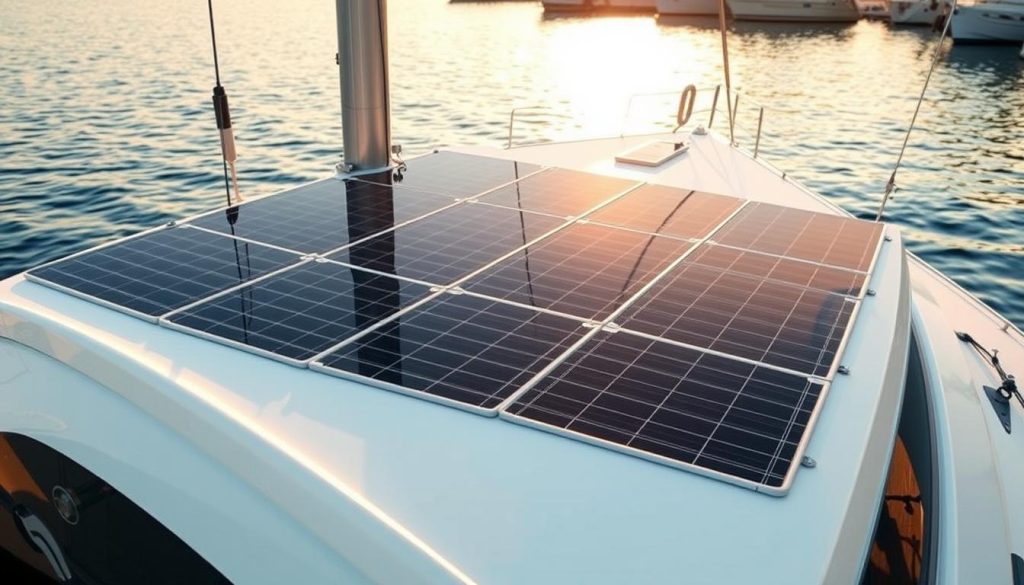
To get the most from your solar panels, mounting them correctly is crucial. Choose a spot with maximum sun exposure, like the cabin top or radar arch. Ensure the surface is secure and even. When wiring, select the right gauge wire—typically 10 AWG for systems over 100 watts—and use marine-grade connectors to prevent corrosion3.
- Mount panels in areas with full sun exposure.
- Use 10 AWG wire for systems over 100 watts.
- Marine-grade connectors prevent corrosion.
Setting Up the Charge Controller and Batteries
The charge controller is key to regulating power flow. Install it within 7 inches of the battery for optimal performance2. Set the controller to match your battery type—be it lead-acid, AGM, or lithium. This ensures proper charging and prevents damage. Maintain voltage levels between 13-14.5V for a 12V system to avoid overcharging and extend battery life.
- Install controller within 7 inches of the battery.
- Set controller to match your battery type.
- Maintain voltage between 13-14.5V for 12V systems.
Using specialized kits can simplify installation. These kits usually include pre-wired components and connectors, reducing the risk of errors. Always follow the manufacturer’s instructions and consider consulting a professional if unsure.
By following these tips, you’ll ensure a safe and efficient solar panel system, providing reliable power for your boating adventures.
Maximizing Efficiency: Orientation, Shade, and Power Output
Maximizing the efficiency of your marine solar setup involves careful consideration of panel orientation, managing shade, and monitoring power output. Proper alignment towards the sun can significantly boost energy production, even with slight adjustments. For instance, tilting panels to match the sun’s angle can increase watt output by up to 30%8.
Shade is a major efficiency killer. Even partial shading of a single cell can reduce the entire panel’s output by up to 50%8. To combat this, use a maximum power point tracking (MPPT) controller, which optimizes energy production even in shaded conditions. I’ve found that adjusting panels during peak sun hours and cloudy days can maintain consistent power output.
Monitoring your system’s performance is crucial. Tracking output in amps and watts helps identify inefficiencies. For example, a 100-watt panel typically produces about 25 amp-hours daily under average conditions8. Using a portable watt meter provides real-world performance insights during daily outings.
| Factor | Impact on Efficiency | Solution |
|---|---|---|
| Orientation | Improves energy capture | Adjust panels to match sun angle |
| Shade | Reduces output significantly | Use MPPT controllers |
| Monitoring | Identifies inefficiencies | Track output in amps/watts |
By focusing on these strategies, you can ensure your marine solar system operates at peak efficiency, providing reliable power for your boating adventures.
Maintenance and Longevity for Marine Solar Installations
Proper maintenance is crucial to ensure your marine solar installations last for years. I share my regular maintenance routine to ensure my marine solar installations remain efficient over the years.
Routine Cleaning and Inspection Protocols
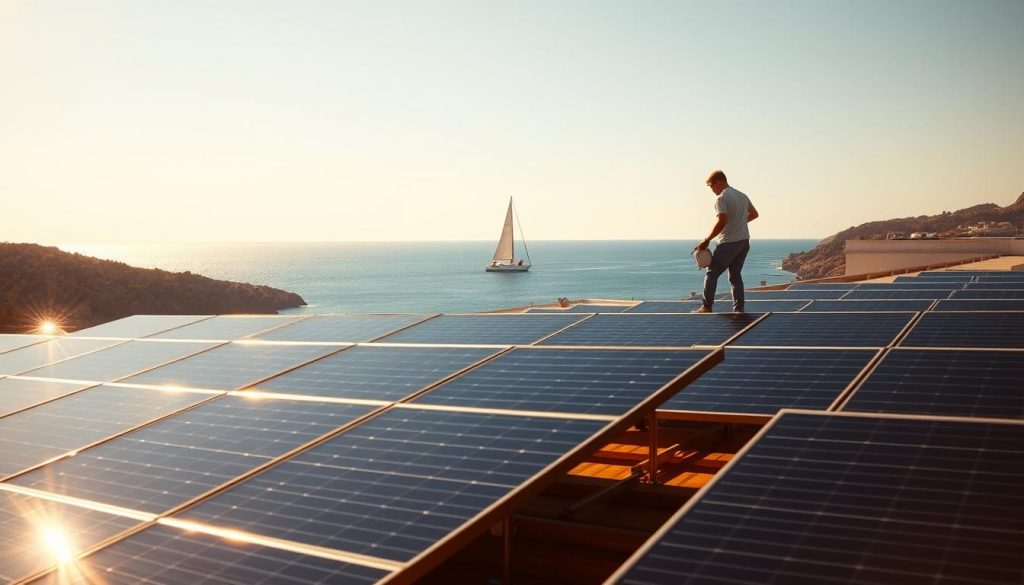
Regular cleaning and inspections are essential to maintain peak performance. I clean my panels monthly using marine-grade cleaning products to remove salt spray and grime. This simple step ensures optimal energy absorption. Additionally, I inspect the wiring and connections for any signs of wear or corrosion, addressing issues before they escalate.
Addressing Common Maintenance Challenges
Common challenges like saltwater corrosion and shading can impact performance. To combat corrosion, I use marine-grade components designed for harsh environments. For shading issues, I trim nearby obstructions and adjust panel angles to maximize sun exposure.
Regularly checking the battery and charge controller is vital. I ensure the charge controller is functioning correctly and the battery is holding its charge. Following the American Boat and Yacht Council’s recommendation, I installed in-line fuses within 7 inches of the battery for added safety2.
- Clean panels monthly with marine-grade products.
- Inspect wiring and connections for wear.
- Use marine-grade components to prevent corrosion.
- Adjust panels to avoid shading and ensure proper sun exposure.
- Check battery and charge controller function regularly.
By following these maintenance tips, you can ensure your marine solar system remains efficient and reliable for years to come.
Comparing Marine Grade and Standard Solar Panels
When choosing solar panels for marine use, it’s essential to understand the differences between marine grade and standard panels. Marine grade panels are specifically designed to withstand harsh marine environments, offering superior durability and performance.
Understanding Marine-Specific Design Features
Marine grade panels feature robust designs with anodized aluminum frames and high-quality sealants to protect against seawater corrosion2. They also include specialized bypass diodes to minimize shade effects, ensuring consistent energy production even in challenging conditions.
- Waterproofing and corrosion-resistant materials
- Robust wiring and connections
- Specialized bypass diodes for shade management
While standard panels may offer decent performance on land, marine environments demand higher resilience. Marine grade panels, such as monocrystalline options, provide up to 17% efficiency3, outperforming standard panels in low-light conditions.
Flexible panels are another excellent choice for marine use, offering adaptability for curved surfaces while maintaining impressive performance. These panels are ideal for installations where space is limited, providing a reliable energy solution without compromising on efficiency.
Exploring Flexible, Semi-Rigid, and Rigid Panel Options
When it comes to selecting solar panels for your boat, understanding the differences between flexible, semi-rigid, and rigid options is crucial. Each type offers unique benefits, and choosing the right one can significantly impact your boating experience.
Advantages of Flexible Panels for Curved Surfaces
Flexible solar panels are a game-changer for boats with curved surfaces. These panels can conform to the shape of your boat, providing a seamless installation without compromising performance. For instance, a high-quality flexible solar panel can achieve an efficiency of around 8%2, making them ideal for areas where traditional panels won’t fit. I’ve found that flexible panels are perfect for curved surfaces, ensuring maximum energy absorption while maintaining the boat’s aesthetic appeal.
Durability Insights of Semi-Rigid and Rigid Panels
Semi-rigid panels offer a balance between flexibility and durability. They can conform to a slightly curved surface, up to 5 degrees3, and are walkable, making them a practical choice for areas with light foot traffic. Rigid panels, on the other hand, are the most efficient, with some models reaching over 23% efficiency3. While they lack flexibility, their high efficiency makes them ideal for spaces where maximum power output is a priority.
From my experience, a 120-watt rigid panel can generate significantly more power than a flexible option, especially in direct sunlight. However, flexible panels like the 100-watt solar option remain a popular choice for their versatility and ease of installation3.
When choosing between these options, consider your boat’s design and energy needs. If you have ample flat surfaces, rigid panels might be the best choice. For curved areas, flexible panels are the way to go. Semi-rigid panels offer a middle ground, providing some flexibility without sacrificing too much efficiency.
In summary, flexible, semi-rigid, and rigid panels each have their place in marine solar installations. By understanding their strengths and weaknesses, you can make an informed decision that meets your energy needs and enhances your boating experience.
Real-World Experiences and Cost Benefits of Solar on Boats
From my personal experience and that of fellow boaters, solar power has been a game-changer. I’ve seen firsthand how a well-designed system can slash energy costs and enhance sustainability. For instance, a 100-watt high-efficiency panel can generate up to 650 watt-hours daily3, which is enough to power essential systems like lights and refrigerators.
One of the most significant cost benefits is the long-term savings. While the initial price of a solar system can be steep, it pays off over time. For example, a 400-watt system with high-efficiency panels can produce about 200 amp-hours daily3, reducing your reliance on generators and lowering fuel costs. Plus, with the Federal tax credit offering 30% off qualified installations3, the upfront cost becomes more manageable.
| System Wattage | Efficiency | Daily Output |
|---|---|---|
| 100W (Average) | ~14% | 500Wh |
| 100W (High-Efficiency) | ~17% | 650Wh |
| 400W (High-Efficiency) | ~21% | 200Ah |
Customer testimonials highlight the reliability and efficiency of these systems. Many have reported significant reductions in their energy expenses, with some even opting for larger systems to meet their growing needs. The key is to choose a product that balances price and performance, ensuring you get the best value for your investment.
Conclusion
As I conclude my journey through the world of marine solar energy, I want to emphasize how transformative this technology can be for boat owners. By embracing renewable energy, you not only reduce your environmental footprint but also gain energy independence, especially on those serene, extended voyages.
A well-installed and maintained solar system can surpass your expectations in both power output and longevity. Key components like a reliable charge controller and high-quality panels ensure your system operates efficiently, even on cloudy days3.
When selecting your system, consider your specific needs and budget. Whether you opt for flexible panels that contour to your boat’s curves or rigid panels for maximum efficiency, the right choice will enhance your boating experience while minimizing costs.
I encourage you to explore the technical details shared throughout this guide and reach out for personalized advice. Thank you for joining me on this journey toward a greener, more energy-independent boating lifestyle.
Read more about portable solar panels
FAQ
How do solar panels charge batteries on a boat?
What’s the difference between monocrystalline and polycrystalline panels?
Can flexible panels be used on curved surfaces?
How much power does a 100-watt panel produce?
How should I install solar panels on my boat?
How can I maximize the efficiency of my solar panels?
How do I maintain my solar panels?
Why should I choose marine-grade solar panels?
How do flexible panels differ from rigid ones?
What is the typical lifespan of marine solar panels?
How do I choose the right size of solar panel for my boat?
Are flexible solar panels durable?
Source Links
- https://custommarineproducts.store/collections/marine-solar-panels?srsltid=AfmBOopLFAZJjXBqZgdiOUNNwl8GyiSQbY9ppfZoZAh-ylu8cRZWLS1N
- https://www.boatus.com/expert-advice/expert-advice-archive/2024/march/boat-solar-panels
- https://custommarineproducts.store/collections/marine-solar-panels
- https://offgridpowerstation.eu/solar-panels/boat/
- https://www.bluettipower.com/blogs/news/all-you-need-to-know-about-marine-solar-panels?srsltid=AfmBOorWSrOSCiLEsdkjrQ_lOKF-x5KnoppRO3qqf0wSZfIBttmOQA9m
- https://www.solarreviews.com/blog/solar-panels-for-boats
- https://www.rightboat.com/blog/best-solar-panels-for-boats
- https://custommarineproducts.store/blogs/marine-solar-systems/top-15-questions-about-marine-solar-panels?srsltid=AfmBOor9i9KA1cfoy9rNqyXiCLAbHPbjgsyZfamjaUuLJ7s_lyOzUJCa
1 thought on “Solar Panels for Boats: My Green Energy Guide”