

Imagine this: you’re on a scenic road trip, surrounded by nature, with no noisy generators or expensive hookups in sight. Sounds liberating, right? RV solar panels are making this vision a reality for many adventurers. By harnessing the sun’s energy, you can enjoy the freedom of off-grid adventures while keeping your devices powered. But how does it all work?
A well-designed solar panel system can be a game-changer. It not only reduces your reliance on generators but also lowers your environmental impact. In this guide, we’ll break down the essential components of a solar setup, how to calculate your power needs, and the best installation options. Whether you’re a weekend camper or a full-time RVer, understanding solar power can enhance your travel experience.
Investing in solar panels is more than just an eco-friendly choice; it’s a smart investment for the long haul. With proper maintenance, a solar system can last for years, providing you with clean energy and significant cost savings. So, let’s dive into the details and explore how you can make the most of this innovative technology on your next adventure.
Table of Contents
Key Takeaways
- RV solar panels offer a quiet and sustainable alternative to generators.
- A typical solar panel system costs around $2,000, with additional installation fees1.
- For essential power needs, a 200-watt system is recommended, while comfort-minded users may need 400-700 watts1.
- Portable solar panels provide a lower-cost solution but are less efficient than roof-mounted options2.
- A well-sized inverter and battery bank are crucial for reliable energy supply, especially during low sunlight2.
- Lithium-ion batteries can last up to ten years and offer better discharge capabilities than traditional batteries3.
Introduction to RV Solar Power
As an avid RV enthusiast, I’ve always sought ways to enhance my adventures. My journey into solar power began during a camping trip when I realized the freedom it offered. This discovery sparked a passion for sustainable energy, leading me to explore how solar power could transform my RV experiences.
My Personal Journey to Solar RV Living
Transitioning to solar power was a game-changer. It offered a quiet alternative to generators and reduced my environmental impact. I was fascinated by the components—battery banks, inverters, and charge controllers—that made this system efficient. This setup allowed me to venture off-grid while keeping my RV powered, which was liberating.
Why I Decided to Harness Solar Energy on the Road
The decision to switch was driven by the desire for energy independence and cost savings. Solar power not only cut my energy costs by up to 50%4 but also aligned with my eco-friendly values. I recall a challenging trip where solar power kept my devices charged despite limited sunlight, showcasing its reliability.
Sharing this experience, Jesse and Lauren Stuart noted how solar power transformed their RVing, allowing longer off-grid stays5. This resonated with me, as it highlighted the accessibility of solar systems for all users, from beginners to seasoned adventurers.
Solar power has democratized off-grid camping, with 60% of RV owners opting for this style6. This section will delve into the components and calculations needed for a seamless transition, ensuring your RV adventures are both powered and eco-conscious.
Essential Components of an RV Solar System
Building an efficient RV solar system starts with understanding its core components. Each part plays a vital role in ensuring your system runs smoothly and provides reliable power. Let’s break down the key elements you need to know.
Understanding Battery Banks, Inverters, and Charge Controllers
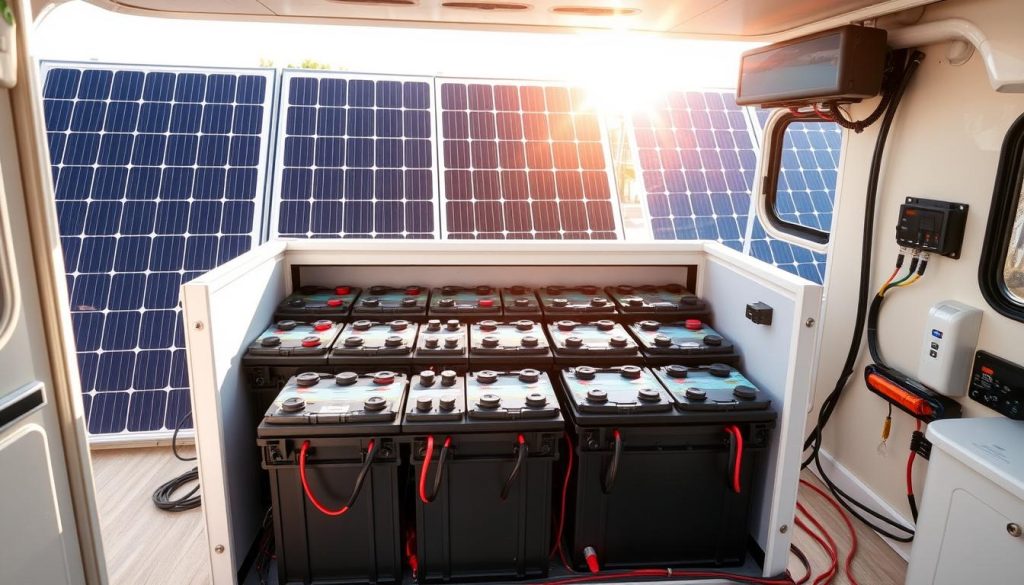
Your battery bank is the heart of your solar system, storing excess energy for later use. A well-sized battery bank ensures you have power during cloudy days or at night. When choosing a battery, consider its capacity and depth of discharge to match your energy needs. For instance, lithium-ion batteries are preferred for their efficiency and longer lifespan.
The inverter is another crucial component, converting DC power from your batteries to AC power for your appliances. Selecting the right inverter size is essential to handle your maximum power demand. A higher capacity inverter may be necessary if you plan to run multiple devices simultaneously7.
A charge controller regulates the flow of energy from your panels to the batteries, preventing overcharging. This component ensures your batteries maintain optimal health and longevity. Look for a controller that matches your system’s voltage and current requirements to maximize efficiency8.
Wiring, Mounting, and Additional Equipment
Proper wiring and mounting are often overlooked but are vital for safety and performance. Use high-quality wiring to minimize energy loss, and ensure your panels are securely mounted to withstand various weather conditions. Additional equipment like fuses and circuit breakers adds layers of protection to your system.
Selecting the right components can be overwhelming, but focusing on your specific needs makes the process manageable. By understanding each part’s role and ensuring proper installation, you can build a reliable and efficient solar system for your RV adventures.
Calculating Your Power Needs for Off-Grid RVing
To ensure your off-grid adventures are smooth and uninterrupted, it’s crucial to calculate your power needs accurately. This process helps you choose the right system size and capacity for your energy demands.
Estimating Watt Use and Consumption
Start by listing all your appliances and devices, noting their wattage. For devices rated in amps, convert to watts using the formula: watts = volts × amps. For example, a 120-volt device drawing 3 amps uses 360 watts2.
Calculate daily energy consumption by multiplying wattage by usage hours. A rice cooker used for 30 minutes (0.5 hours) at 360 watts consumes 180 watt-hours. A phone charger at 5 watts for 1 hour adds 5 watt-hours. Sum these for your total daily consumption.
Consider high-energy devices like blow dryers (1,500 watts for 10 minutes = 150 watt-hours). Your total might look like: phone (5Wh), rice cooker (180Wh), blow dryer (150Wh) = 335Wh daily.
Determining Solar Panel Output and System Capacity
Estimate solar panel output based on weather and sun exposure. A 100-watt panel produces about 350 watts daily2. To cover 355Wh, a 400-watt system is ideal, offering a safety margin for cloudy days.
Choose a system with enough capacity for both regular and high-demand devices. Include a 20-30% safety margin to avoid undersizing your system. Creating a personal energy spreadsheet helps track usage and plan efficiently.
Solar Panel Installation and Setup Options
When it comes to harnessing solar power for your RV, the installation method plays a crucial role in efficiency and convenience. Two popular options are portable solar panels and permanently mounted panels. Each has its own set of advantages and considerations.
Portable Solar Panel Solutions for Flexibility
Portable solar panels offer unmatched flexibility and ease of setup. These systems, often in suitcase form, are ideal for casual users who want a low-cost solution without permanent installation. They can be easily moved to optimize sunlight exposure, making them perfect for short trips or supplementary power needs. However, portables may be less efficient and require more manual adjustment compared to permanent setups2.
Permanently Mounted Panels for Maximum Efficiency
For those seeking maximum efficiency, permanently mounted panels are the better choice. Installed on the RV’s roof, they continuously generate power—even while driving—ensuring a steady energy supply. While they are more expensive upfront, they offer a better cost-per-watt ratio and higher efficiency in the long run. Professional installation is recommended for permanents to ensure safety and optimal performance2.
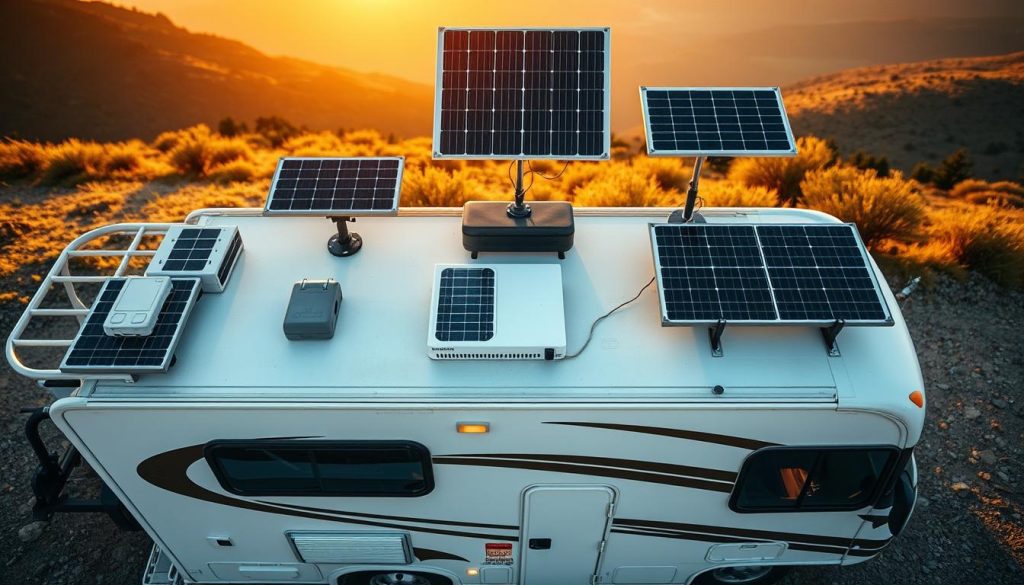
Choosing between portable and permanent panels depends on your lifestyle and energy needs. Portables are great for flexibility, while permanents provide efficiency and convenience. Assessing your RV’s layout and energy demands will help you make the best decision for your adventures.
Maximizing Efficiency and System Performance
Optimizing your RV’s solar system can significantly enhance your off-grid experience. By making a few simple adjustments, you can boost energy output and reduce power loss. Let’s explore some practical strategies to get the most out of your setup.
Optimizing Panel Placement and Avoiding Shading
Proper panel placement is key to maximizing energy capture. Ensure your panels are positioned to avoid shading from roof accessories like vents or antennas. Even partial shade can reduce efficiency by up to 30%3.
Simple Tweaks for Better Performance
Switching to LED lighting can make a big difference. LEDs use significantly less power than traditional bulbs, helping to extend your battery life. For instance, replacing a 50-watt incandescent bulb with an LED can reduce consumption by 80%3.
| Type | Features | Benefits |
|---|---|---|
| Lithium-ion Batteries | Lightweight, High Efficiency | Last up to 10 years, 80% discharge capacity |
| AGM Batteries | Reliable, Maintenance-Free | Balanced performance and cost |
| Lead-Acid Batteries | Economical, Durable | Heavier, shorter lifespan |
Regular maintenance is essential. Clean your panels monthly and check connections to prevent energy loss. These small steps can keep your system running at peak performance.
By implementing these strategies, you can enjoy a more efficient and reliable solar power system, enhancing your RV adventures.
Choosing the Right Solar panels for RVs
Selecting the perfect solar panels for your RV can be a daunting task, especially with so many options available. However, by focusing on a few key factors, you can make an informed decision that meets your energy needs and budget.
Key Factors to Consider When Buying Your Equipment
When shopping for solar panels, it’s essential to evaluate wattage output, overall capacity, and compatibility with your RV’s electrical system. High-quality components, including batteries, inverters, and charge controllers, ensure optimal performance and longevity. Look for products with certifications that meet industry standards, as they are more reliable and safer to use.
A critical decision is whether to opt for a portable solar panel or a permanently mounted system. Portable systems offer flexibility and lower costs, making them ideal for casual users. For example, a 200-watt portable kit from Renogy is priced around $469.991, providing a cost-effective solution for smaller energy needs. On the other hand, permanent installations, while more expensive upfront, offer better efficiency and convenience, especially for full-time RVers.
Matching System Size to Your RV’s Energy Demands
To ensure your system meets your energy demands, calculate your daily power consumption. As a rule of thumb, a 200-watt system is sufficient for essential needs like lights and small appliances1. However, for comfort-minded users, a 400-700 watt system is recommended to power larger devices like microwaves and TVs. Consider your specific energy usage and lifestyle to avoid undersizing your system, which can lead to insufficient power during cloudy days or extended off-grid stays.
When comparing components, weigh the benefits of premium options against budget-friendly alternatives. For instance, lithium-ion batteries, while more expensive, offer longer lifespans and higher efficiency compared to traditional lead-acid batteries. Similarly, MPPT charge controllers can boost efficiency by up to 30% compared to PWM controllers3.
Finally, always read manufacturer specifications and warranties carefully to avoid common pitfalls. Consulting with a professional can provide personalized recommendations tailored to your RV’s specific needs and ensure a seamless installation process.
Conclusion
As you embark on your journey to harness the sun’s power for your RV adventures, remember that solar energy is more than just an eco-friendly choice—it’s a pathway to true freedom on the road. By understanding your power needs, selecting the right components like battery banks and inverters, and choosing between portable or permanently mounted panels, you can create a system that keeps up with your lifestyle.
Properly sizing your system ensures you have enough energy to power essentials, even on cloudy days1. Whether you’re a casual camper or a full-time RVer, the long-term savings and reduced reliance on generators make solar a smart investment. With the right planning and setup, you can enjoy the peace of mind that comes with a sustainable energy source.
Use this guide as your roadmap to designing a system that meets your needs. With careful planning, you can successfully harness the sun’s power, opening the door to unforgettable off-grid experiences. Embrace the freedom and adventure that solar energy brings to your RV travels!
Interested in Solar panels for boats?
FAQ
How do I choose the right size for my RV solar system?
What’s the difference between watts and amps in my RV setup?
How long does it take to charge my RV batteries with solar?
Can I use portable solar panels for my RV?
What’s better: portable or permanently mounted panels?
Is solar a good investment for my RV?
Source Links
- https://www.energysage.com/solar/alternatives-to-rooftop-solar/rv-solar-panels/
- https://www.gorving.com/tips-inspiration/expert-advice/rv-solar-panels-beginners-guide-going-solar
- https://gopowersolar.com/rv-solar-a-complete-guide/
- https://backcountrysolar.com/rv-solar-intro-guide/
- https://heartlandrvs.com/solar/
- https://cruiserrv.com/what-is-solar-power-and-do-i-need-it-cruiser-rvs/
- https://www.cnet.com/home/energy-and-utilities/solar-panel-buying-guide-for-rvs-and-travel-trailers-what-you-need-to-know/
- https://www.bougerv.com/collections/solar-panels?srsltid=AfmBOop4aXP6Bw5Ok99UG7zwApa_aQPMZLJI97_tPKRGWIb6ym7HAYdu