

Imagine the peace of mind when you know the surfaces you touch are fighting germs. I’ve been extra careful, wiping down everything, and it’s changed how I see cleanliness. Modern hygiene solutions like antimicrobial surfaces are a game-changer. They work hard to fight off bacteria and viruses, keeping us safe.
New antimicrobial technology shows surfaces can kill germs fast, including SARS-CoV-21. Germs on surfaces are a big health risk, but now we have a solution. These surfaces stay effective for months, even when things get tough1. It’s not just about clean surfaces; it’s about making our spaces safe from germs.
The FDA and the European Commission have okayed antimicrobial agents like α-terpineol for use1. This makes us feel safer using these technologies at home and in public places.
Table of Contents
Key Takeaways
- Antimicrobial surfaces combat bacteria, viruses, and fungi, enhancing cleanliness.
- Modern advancements achieve a >4-log reduction in pathogens like SARS-CoV-2 within minutes1.
- These surfaces maintain efficacy for several months, ensuring prolonged protection1.
- Approved by the FDA and European Commission, agents like α-terpineol ensure safety for direct contact1.
- Antimicrobial surfaces contribute to creating germ-resistant environments1.
Understanding Antimicrobial Surfaces
In today’s world, we’re all about staying healthy. Antimicrobial surfaces are key in fighting off infections. They use special technology to stop germs from growing and spreading. This helps a lot in keeping us safe from infections.
Definition and Importance
Antimicrobial surfaces stop harmful germs from multiplying. They’re very important in hospitals, where infections can be deadly. These surfaces help protect us by fighting off germs.
For example, copper surfaces can kill 99.9% of germs in just two hours if they’re cleaned often. This is super important in places where germs spread fast. It helps keep everyone healthier.
How Antimicrobial Surfaces Work
These surfaces work by stopping germs from living. Copper, for instance, kills almost all bacteria in two hours. They also cut down on flu virus by 75% in just one hour.
They can work in different ways, like using special materials or light. Things like silver and titanium dioxide help by making it hard for germs to stick around. Some chemicals even stay active on surfaces, keeping germs away for good.
In short, antimicrobial surfaces are a mix of science and practical use. They’re a big help in keeping us safe from infections. By knowing how they work, we can see how important they are for our health.
Benefits of Using Antimicrobial Surfaces
Antimicrobial surfaces are great for places where many people touch things like doorknobs, countertops, and light switches. They make these areas safer and cleaner, helping to stop the spread of germs.
Reducing Germ Spread in High-Touch Areas
Antimicrobial surfaces are very good at cutting down germs in places where lots of people touch things. This makes hospitals and schools safer from infections2. These surfaces can have up to 99% fewer germs than regular surfaces, making them safer for everyone2.
Using these surfaces in public and business areas has shown great results. Places that use antimicrobial technology see a 25% better view on cleanliness2. They also meet health rules better, avoiding fines by up to 40%2
Prolonged Protection Against Pathogens
Antimicrobial surfaces keep fighting germs for a long time, up to 25 years3. This means they stay effective without needing to be cleaned often. It’s a good way to keep places germ-free, which is important for areas like doorknobs and handrails2.
In hospitals, using these surfaces has cut down on germ spread, helping patients get better faster3. Studies since 2013 have shown they work well in hospitals, reducing infections3.
Applications of Antimicrobial Surfaces in Homes
Adding antimicrobial surfaces to your home boosts cleanliness. They are great for kitchens and bathrooms, where germs easily spread. Using these surfaces in these areas can greatly reduce germs.
Kitchen and Bathroom Surfaces
Antimicrobial kitchen surfaces protect against harmful germs. Making kitchen counters antimicrobial keeps them clean longer. Copper, for example, kills 99.9% of germs in two hours4.
For bathrooms, using antimicrobial materials on faucets and counters is smart. Studies show these surfaces have fewer germs than regular ones5. This makes kitchens and bathrooms safer, where germs can stay for months without cleaning5.
Door Handles and Light Switches
Door handles and light switches get dirty fast. Coatings on these areas cut down on germs5. Copper, known for its germ-fighting powers4, is a good choice. Using materials like Microban’s SilverShield® on these surfaces helps keep your home germ-free5.
In short, using antimicrobial surfaces in homes makes them cleaner and healthier. It’s key for keeping modern homes clean and germ-free.
Antimicrobial Surfaces in Commercial Spaces
Antimicrobial surfaces have changed how we keep commercial areas clean. They help stop germs and bacteria from spreading. This makes places like offices and stores healthier and cleaner.
Office Spaces
Putting antimicrobial surfaces on desks, door handles, and common areas helps a lot. These surfaces stop germs from growing for up to 90 days, studies show6. This means fewer sick days and a more productive work place.
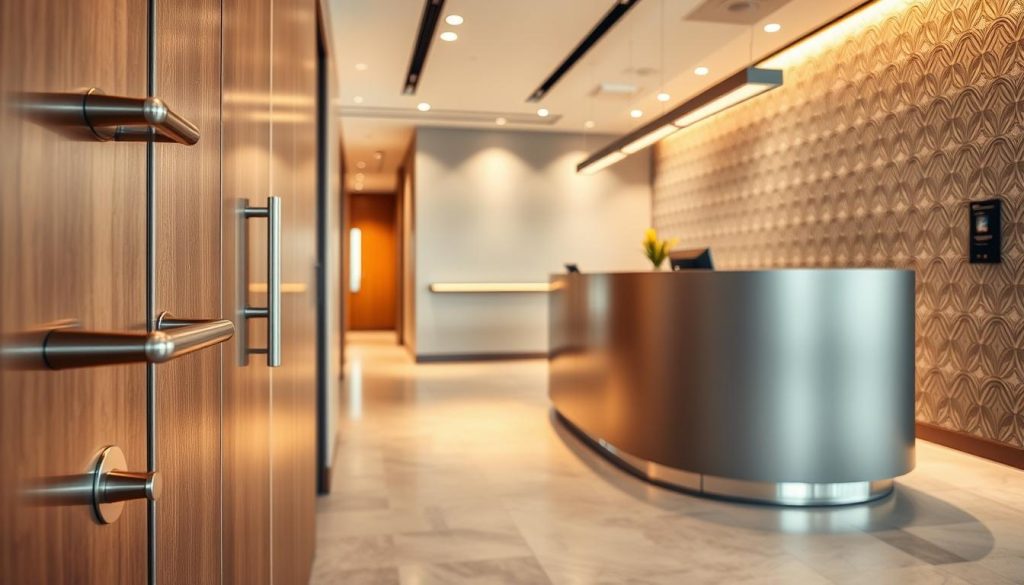
Also, these surfaces can make office furniture last longer by fighting off germs7. OpenWorks, a big name in cleaning, covers over 4,000 places and keeps more than 30 million square feet germ-free6. They make sure these solutions work well, keeping offices clean and healthy.
Healthcare Facilities
Healthcare places need to be super clean to stop infections. Using antimicrobial surfaces in patient rooms and medical gear helps a lot8. These surfaces fight off germs like E. coli and S. aureus well.
These treatments also last for at least six months, helping keep healthcare areas clean for a long time7. This means less need to clean up often, which helps during surgeries. Using these solutions helps stop germs from spreading among patients and doctors.
Materials and Technologies Used in Antimicrobial Surfaces
A variety of materials and technologies are used to make antimicrobial surfaces. Each one has its own benefits. Metals like copper and silver are known for fighting germs naturally. They are used in many places to stop germs from growing.
Copper alloys, for example, are good at reducing bacteria on hospital surfaces. But, we need more proof to be sure they work well9. Silver ions are also used in coatings for healthcare to make surfaces safer and cleaner.
Engineered compounds like Microban and polymer composites offer lasting protection. Microban can kill up to 99.9% of bacteria on surfaces, making it great for keeping things clean10. It’s perfect for places where cleanliness is key, like hospitals and food factories.
Microban also helps products last longer by stopping mold and mildew. It keeps surfaces looking good and smelling fresh, too10.
Other than metals and engineered compounds, antimicrobial additives are added to products during making. These additives can be liquid or powder and are found in things like interior finishes and bathroom fixtures9. These additives stay effective for a long time, keeping users safe from germs.
For example, medical-grade plastics with antimicrobial additives stay strong and work well even in tough conditions11.
Let’s look at some data on different antimicrobial technologies:
| Technology | Materials | Effectiveness | Areas of Application |
|---|---|---|---|
| Microban | Polymers, Plastics | Eliminates up to 99.9% of bacterial growth10 | Healthcare, Food production, Consumer products |
| Copper Alloys | Metal | Reduces bacteria, evidence quality low9 | Hospitals, Public spaces |
| Silver Ions | Metal | Highly effective in healthcare settings | Medical equipment, High-touch surfaces |
The need to fight healthcare-associated infections (HAIs) has made these technologies more popular. Antimicrobial plastics, for example, stop microbes from working, growing, or reproducing11. This progress in surface technology is promising for making our environments cleaner and healthier.
Comparing Antimicrobial Surfaces to Traditional Cleaning Methods
Looking at antimicrobial surfaces and traditional cleaning, we see big differences. Antimicrobial surfaces keep fighting germs, offering better protection over time. This is more than just regular cleaning.
Effectiveness Over Time
Traditional cleaning takes a lot of effort and time. Even with frequent cleaning, germs can still be found on surfaces12. Pathogens can live on surfaces for weeks, always posing a risk13.
On the other hand, antimicrobial surfaces fight off a wide range of germs. They protect against even the toughest, drug-resistant bacteria13.
Maintenance and Care
Keeping traditional surfaces clean is hard work. Many healthcare workers don’t follow hand hygiene rules, leading to more germs12. But, antimicrobial surfaces are easy to care for. They need less cleaning, thanks to their special properties.
For example, certain cleaners can cut down bacteria like A. baumannii and K. pneumoniae in just 72 hours14.
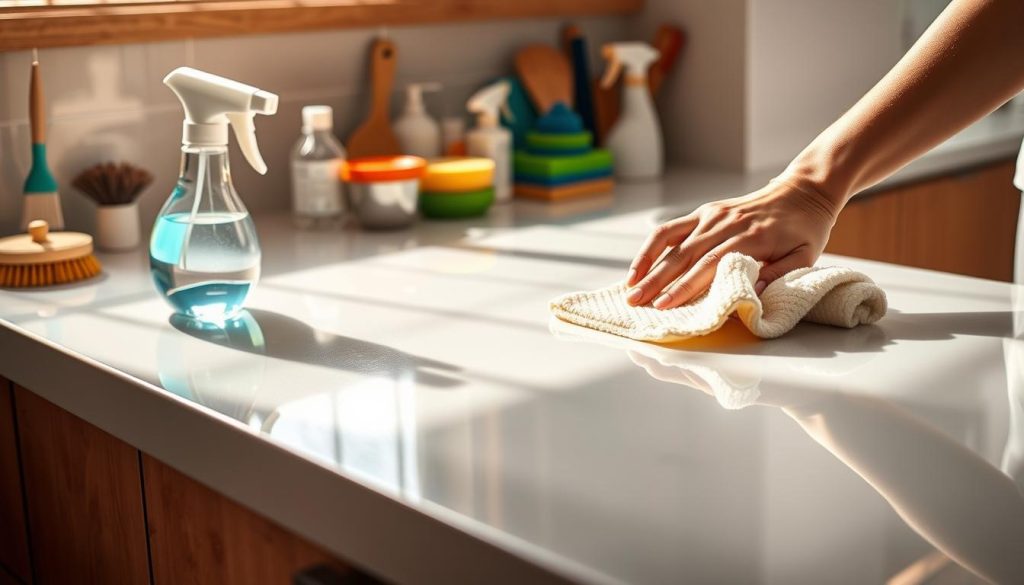
Choosing antimicrobial surfaces means better cleaning and protection with less effort. This saves money and keeps places cleaner.
| Criteria | Traditional Cleaning | Antimicrobial Surfaces |
|---|---|---|
| Required Frequency | Frequently | Infrequently |
| Germ Reduction | Varied Effectiveness | Continuous |
| Labor Intensity | High | Low |
| Long-Term Protection | Low without frequent cleaning | High |
Addressing Health and Safety Concerns
When thinking about using antimicrobial surfaces, it’s key to look at health and safety. Knowing about safe antimicrobial technology and how it’s tested is important. This helps to clear up any worries.
Impact on Human Health
Using safe antimicrobial technology in healthcare needs careful cleaning and disinfection. Environmental Service (EVS) staff should get training right away and every year. This is to keep safety at the highest level15.
But, it’s important to know that surfaces with germs don’t usually spread infections to people16. The CDC says these surfaces are low-risk. They can be cleaned with simpler methods16.
Environmental Considerations
The effect of antimicrobials on the environment is also a big worry. The choice of disinfection depends on several things16. High-touch areas in patient rooms need to be cleaned often. This helps prevent germs and reduces the environmental harm of antimicrobials16.
Regular cleaning is good for protecting workers and stopping germs from becoming resistant16.
Using good cleaning and disinfection methods while thinking about the environment is smart. It helps keep everyone safe in healthcare and daily life. Sharing cleaning data with EVS staff helps everyone follow the rules15.
Conclusion
Antimicrobial surfaces offer big benefits for homes and businesses. They help stop the spread of germs and keep us safe for longer. This is crucial in places like hospitals, kitchens, and offices.
Statistics show that 37,000 and 99,000 people die each year in Europe and the US from infections in hospitals. This shows we need better ways to keep clean17.
Also, these infections cost a lot of money. The EU and US spend about €7 billion and US$ 6.5 billion each year on them17. Using antimicrobial surfaces can save money and lives.
Regular cleaning doesn’t always work. Only 48.1% of surfaces in ICU units are really clean17. But antimicrobial surfaces can fight off germs better.
The future of keeping things clean looks bright. New materials like nanocomposites can fight many germs, even SARS-CoV-2, which can live on surfaces for up to 7 days18. We need to keep making these surfaces better, but safely.
By using these new technologies, we can protect public health and make safer places for everyone.
FAQ
What are antimicrobial surfaces, and why are they important?
How do antimicrobial surfaces work to prevent the spread of germs?
How do antimicrobial surfaces help reduce germ spread in high-touch areas?
What are the benefits of prolonged protection against pathogens provided by antimicrobial surfaces?
Where can antimicrobial surfaces be applied in the home?
How are antimicrobial surfaces used in office spaces?
Why are antimicrobial surfaces crucial in healthcare facilities?
What materials and technologies are used to create antimicrobial surfaces?
How do antimicrobial surfaces compare to traditional cleaning methods in terms of effectiveness over time?
What are the maintenance and care requirements for antimicrobial surfaces?
Are there any health concerns related to antimicrobial surfaces?
What are the environmental considerations of using antimicrobial surfaces?
Source Links
- https://pmc.ncbi.nlm.nih.gov/articles/PMC9399129/
- https://www.studioforma.ca/the-importance-of-antimicrobial-surfaces-in-high-touch-areas/
- https://isku.com/en/understanding-the-benefits-of-antimicrobial-surfaces/
- https://www.imperial.ac.uk/stories/antimicrobial-surfaces/
- https://www.microban.com/blog/antimicrobial-surfaces-eliminate-contamination-concern
- https://www.openworksweb.com/blog/how-does-antimicrobial-surface-protection-work
- https://www.kitchenerclean.com/blog/antimicrobial-surface-treatment-for-office-spaces-reducing-the-risk-of-contamination
- https://www.janitorialmanager.com/blog/are-antimicrobial-surface-coatings-actually-effective/
- https://orf.od.nih.gov/TechnicalResources/Documents/Technical Bulletins/20TB/Antimicrobial Technology in the Building Industry September 2020 – Technical Bulletin_508.pdf
- https://www.microban.com/antimicrobial-solutions/applications/antimicrobial-plastics
- https://teguar.com/antimicrobial-coating-medical-grade-plastic/?srsltid=AfmBOorXXlGF7ATfBBx6oniN1zPxHkLVRkUT_VldW-OoxGLQ-AH7POvb
- https://pmc.ncbi.nlm.nih.gov/articles/PMC7127218/
- https://www.frontiersin.org/journals/microbiology/articles/10.3389/fmicb.2024.1412269/full
- https://www.nature.com/articles/s41522-022-00335-7
- https://www.cdc.gov/healthcare-associated-infections/hcp/infection-control/index.html
- https://www.cdc.gov/infection-control/hcp/environmental-control/environmental-services.html
- https://pmc.ncbi.nlm.nih.gov/articles/PMC7561179/
- https://link.springer.com/article/10.1007/s10853-021-06404-0