
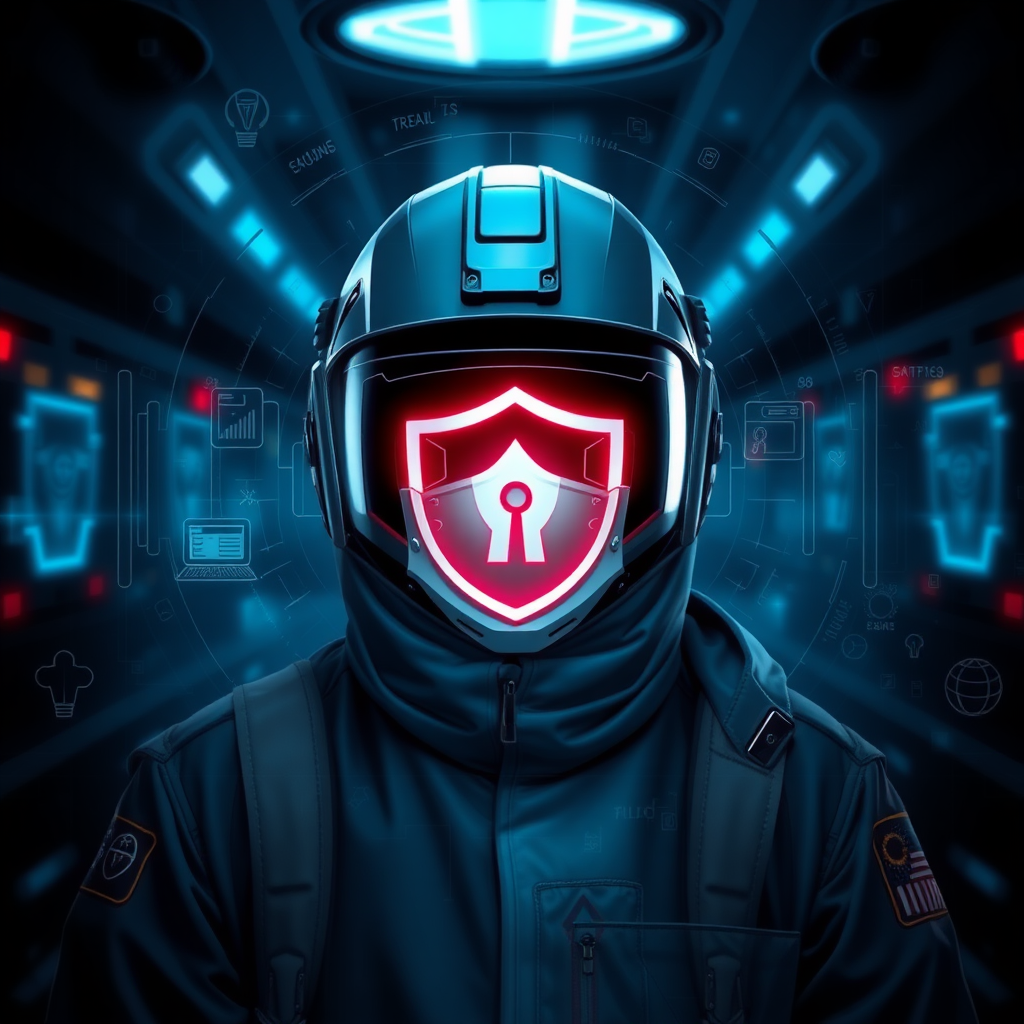
Personal Safety 2030: Going into 2030 means entering a world where AI, rather than an emerging technology, has deeply penetrated day-to-day living. In personal safety, it serves as the bedrock of innovation while proposing advanced solutions that allow individuals to innovate ways of being safe worldwide. AI in 2030 is all about anticipating risks and personalizing safety and automating protection ways that we were only fantasizing a few years ago.
As personal safety increasingly becomes bound with AI, let’s ponder how this game-changing technology is reinventing security, wellness, and peace of mind in 2030.
Table of Contents
Hyper-Personalized Safety Systems for Personal Safety 2030
In the year 2030, AI systems offer hyper-personalized safety answers: individualized to the unique behavior, environment, and lifestyle of each user. Unlike old one-size-fits-all safety tools, AI now learns and adapts right alongside users to grow protection to meet individual needs.
How It Works:
Contextual awareness: AI knows your routine-where you go, what time you travel, and your day-to-day habits. It analyzes that data and proactively provides safety tips, recommending safer routes to travel, alerting you when unusual activity is happening near your home, or even adjusting home security settings when you are away.
Real-Time Risk Analysis: Consecutively, the AI processes information coming from wearables, surroundings, or personal habits to determine possible danger. If you are right in the middle of a city with high growth in criminal activities, your system may discreetly advise you on other routes or raise surveillance.
By offering a customized approach toward safety, AI in 2030 enforces security on every single individual as per their situation, thereby reducing risks even before they happen.
AI-Operated Autonomous Safety Drones
Arguably, the most impressive breakthrough of the year 2030 is the general use of AI-powered autonomous drones in personal and public safety. Such drones have been sent against the police and military for neighborhood patrolling and monitoring public areas, including as personal guardians in high-risk environments.
Key Features:
Instant Response Capabilities: With high-definition cameras, motion detectors, and even microphones fitted onto them, AI-powered drones could be deployed within seconds after the detection of a threat. If you trigger an emergency alert on your wearable device, a drone could instantly respond to fly to where you are, record what happens, and livestream it to emergency services.
Crowd Safety Monitoring: AI drones continuously scan for any potentially dangerous events at crowded events, such as concerts or protests. They conduct analytics in real-time and feed it to the security personnel for proactive actions.
Personal Escorts: To make those who feel unsafe walking alone a little more comfortable, on-demand AI drones can become your protective escort by keeping a watchful eye until you reach your destination safely.
These autonomous safety drones add a new dimension to protection, combining immediacy, surveillance, and intervention to help prevent incidents before they can get any worse.
AI-Powered Augmented Reality Safety Gear
By 2030, the next generation of personal safety devices will involve AI-driven augmented reality safety gear, such as smart glasses or visors that superimpose critical information directly on your field of view.
How It’s Used:
Real-time Safety Alerts: Visualize walking down a dimly lit street, and AR glasses point out any danger that surrounds you, whether it’s a dark alleyway, a suspicious character lurking, or an oncoming vehicle. AI processes the world around you and provides real-time warnings via AR so that you are instantly abreast of what’s happening.
Personal Navigation and Assistance AR Devices: These are devices that do not only warn one against impending danger but take one through personally and assist him or her. In case of an emergency, whether it is your AR gear, it does all the mapping of the safest route to an exit, connects you with emergency services, or even suggests a place nearby where you can seek safety.
Integrated Health Monitoring: Besides the external threats, AR safety gear in 2030 can also track your health internally. AI-driven sensors integrated with the gear continuously track vital signs such as heartbeat, oxygen levels, or hydration, alarming when the user starts to show physical distress or panic.
These AR-powered tools with AI let users perceive their environment in ways they never imagined possible and give them personal responsibility for their safety, no matter where they are.
AI-Powered Predictive Policing and Smart Cities
In 2030, AI-powered smart cities become the central hub in personal safety, and predictive policing is king. The cities employ sprawling networks of interconnected AI systems able to study crime patterns, anticipate potential issues, and manage resources far better.
How It Works:
Crime Prediction Models: Artificially intelligent systems can now identify the time and place of potential crimes by analyzing huge volumes of data-a task which includes but is not limited to masses of historical crime rates, trending on social media, and environmental factors down to live feeds from surveillance systems. It aids law enforcers in being proactive in those areas so that they may nip the incidents in the bud.
Smart Infrastructure: The smart cities of 2030 have adapted AI that feeds into the infrastructure and continuously evolves to emerging safety needs. For instance, AI-managed streetlights brighten in areas where suspicious activity is detected while public transportation routes are rerouted based on real-time safety data.
Collaborative AI Networks: With a shared network of AI, there is incessant communication between the people, law and order, and city infrastructure. In the event of an incident, smart cameras, drones, and AI coordinate their actions to provide authorities with situational awareness and facilitate swift responses.
With predictive AI at the center, smart cities take proactive stances towards creating safety well before anything mars public safety.
AI and Mental Health Safety
By 2030, emotional and mental well-being had become just as crucial as physical safety, and AI had moved to create some serious tools that protect people from mental health risks. Active AI systems now track individuals’ mental health status in real time and provide support in a personalized and timely manner.
Features:
AI Mental Companions: Advanced AI-powered mental companions would interact with the user during the day by parsing speech patterns, expressions, or even text exchanges to identify signs of stress, anxiety, or depression. If early signs of a crisis are detected, such AI would then provide techniques to help calm them down, provide urgent mental health resources, or even trigger an alert to friends or therapists.
AI-powered Therapy Bots: With the proliferation of AI-powered virtual therapists, there is now a possibility to seek immediate help for mental health issues 24×7. These bots will offer conversational therapy, mood tracking, and mindfulness exercises personalized in accordance with the user’s state of emotion.
Preventative Mental Health Monitoring: Wearables and apps make use of biometric data, including heart rate variability, sleep patterns, and voice analysis, to detect the early signs of deterioration in mental health. AI algorithms predict when individuals are most at risk of burnout, panic attacks, or depressive episodes; thus, timely interventions and coping strategies could be provided.
It integrates psychological and emotional safety into the safety ecosystem, whereby AI now guarantees a more holistic approach to personal protection, taking the emotional health of a person to be as important as physical safety.
Digital-World Safety Driven by AI
By 2030, the issues of digital security are no longer separable from personal safety. Artificial intelligence acts as a core technology that secures individuals against an emergent threat of identity fraud, cyber harassment, and online abuse.
Key AI Innovations:
AI-powered identity protection: AI systems continually track users’ digital footprints for suspicious activities that may include hacking, identity theft, and data breach. Therefore, in case of such a situation, the system can quickly alert the users and shut down unauthorized access before damage is caused.
AI-Moderated Online Spaces: AI algorithms today moderate social media platforms, online communities, and messaging applications on an unprecedented scale by removing toxic content, identifying online predators, and offering users-the first time in history-the capability to block and report abuse in real time.
Personal Data Vaults: AI-powered personal data vaults put users in control over who has access to one’s personal information. These AI-driven personal data vaults encrypt and monitor the flow of data, block unauthorized access, and track any suspicious activity.
In these emerging times of digital threats, AI makes personal safety go beyond the physical world to an increasingly complex digitally interconnected landscape.
What’s Next? The Future of AI and Personal Safety
Beyond 2030, AI will increasingly continue to push the envelope for personal safety beyond what we can currently fully imagine. It includes but is not limited to:
AI-Driven Emotional Empathy Systems: AI will be able to understand and respond at a deep level with human feelings; it does not stop at providing functional safety but extends to giving emotional companionship, reducing loneliness, and fostering mental well-being.
Full-scale autonomous safety networks: As AI improves, whole cities could be kept safe by autonomous networks of drones, robots, and smart infrastructure using AI to coHerein presents the papers published in the Conference Proceedings Volume:.
The future of AI in personal safety is bright, and the more we continue to embrace this transforming technology, the more the future awaits where safety will be smarter, quicker, and more accessible to all.
Conclusion
AI completely reinvents private safety. From autonomous drones for security to AI-powered mental health assistants, we are entering a phase where AI is going to predict risks for us, respond in real time during an emergency, and protect us from physical harm or psychological hurt. The involvement of AI in personal safety is not a direction; it is a revolution in the way we look at our protection and that of our loved ones.
And with more evolution in AI, it will be able to provide innovative solutions for a safe, smart, and secure world.
1 thought on “AI Revolutionizes Personal Safety 2030”